
The Twilight Zone Season 2: Episode 57
"The Prime Mover" Episode Transcript
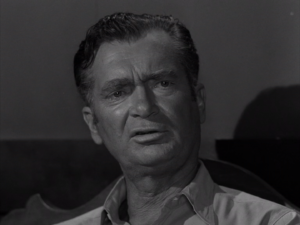
Introduction
Welcome to the Key of Imagination. This week, we’re taking a look at the Twilight Zone episode “The Prime Mover”. We’ll try and figure out what being consumed by talent actually looks like; we’ll explore the question of if Ace would have returned to his normal self on his own with time; and I’ll reveal my moment of awe, a special look at the productive value of failure. So, grab your keys and let’s open up this door to the fifth dimension.
Plot Summary
Ace Larson works in a diner, and although he’s not the kind of guy to pull someone’s leg, he is the kind of guy to pull an arm, especially when it’s attached to the slot machine inside his establishment. But, unfortunately, Ace just seems to have no luck. I mean, he has the affections of a lovely woman named Kitty, and a great, supportive friend named Jimbo, but I mean he has no luck in the things that actually matter in this world: money and power. But all of that is about to change. A car accident outside of the diner finds Ace and Jimbo in a terrible spot–a couple is trapped with power lines all around them and little time to spare, and that is when something miraculous happens. The car begins to move without anyone touching it, freeing the people who were trapped. But, how did this happen? That’s when Jimbo reveals that he can move things with his mind. But nothing is more moved than Ace–right to the casinos, where he and Jimbo begin to clear everyone out. By the end of the night, it’s clear; Ace can’t lose, well, except for the one thing that he used to always value, Kitty, who walks out when she realizes that the man she loved is no longer who he used to be. But, that doesn’t stop Ace, he gets a new girl and an opportunity to gamble against a big Chicago gambler named Phil Nolan. Everything is going well, until Ace’s new squeeze comes in the room, and Jimbo suddenly realizes that he’s, perhaps, more tired than he realized. But, Ace assures his friend, one more throw of the dice, and he’s finished. And so, when the dice get thrown, Ace is finished, as in, he loses it all–the money, the power, and his new blonde friend. But, that’s not all that is lost. It seems Jimbo no longer has his gift. When Ace returns to the diner, the first thing he does is have the slot machine removed. The second thing he does is ask Kitty to marry him, and when she says yes, he realizes that he’s the luckiest man in the world. As the two lovebirds go into the back of the diner, Jimbo, perhaps feeling a bit tired still, reaches his hand out for the broom lying on the floor. And as it floats into his grip, we realize that maybe Jimbo was not being quite so honest back in the hotel room in Las Vegas.
Episode Details
“The Prime Mover” is directed by Richard L. Bare. The teleplay is by Charles Beaumont and based on an idea by George Clayton Johnson. As for our cast, well, our prime mover might be familiar to at least some of you out there. He would go on to strike it rich in the oil industry–or at least the television oil industry. That’s Buddy Ebsen playing Jimbo, the man who probably most people recognize first and foremost as Jedd Clampett of the “Beverly Hillibillies,” which started its successful run in 1962, so just basically a year after this episode. Dane Clark plays Ace Larson; Christine White is the lovely Kitty, and just as a side note: I never put the two-and-two together that this is the same actress who plays Shatner’s wife in “Nightmare at 20,000 Feet.” For whatever reason, they look completely different to me. And Nesdon Booth plays the gangster Big Phil Nolan. The episode first aired on March 24, 1961.
Episode Tidbits
As for our tidbit, Martin Grams Jr’s Unlocking the Door to a Television Classic broke my heart with this one. It turns out that the slot machine in the diner, although the same model apparently, is NOT the one used in the infamous “The Fever” episode. I was kinda’ hoping it was actually. Well, it doesn’t matter, I have my own now that I can spin whenever I want…[Joe], maybe I’ll just put that back down]. The other little tidbit that I just think is always a bit interesting is that the footage of the car crashing is actually just reused stock footage. It was first used in Thunder Road (1958) and then again in the Invisible Invaders (1959). I don’t think I’ve ever seen these movies, so guess what I’m doing over this weekend? I’ll be watching for that scene and hopefully just enjoying a couple of good flicks.
Question 1: Is Serling right in his closing monologue? Is talent a curse when it possesses someone?
Let’s actually start this section by going to the man, the myth, the legend himself–Rod Serling–and getting his exact words on record. Serling states in his closing monologue, “Some people possess talent; others are possessed by it. When that happens the talent becomes a curse. Jimbo Cobb knew right from the beginning. But before Ace Larson learned that simple truth, he had to take a short trip to the Twilight Zone.” Okay, there’s actually quite a bit to unpack here. But, the reason why I chose to focus this question on the closing monologue is because of the language–this idea of being possessed by talent. That brought me back in time a bit to when I used to teach a World Literature class, which I framed as an epic heroes of the world literature class–and yes, it was epic. [booooo sound] Oh, boo yourself…that word works in this context.
I actually want to use a section that I used to read with my students back in the day, from one of the greatest poems ever written: The Iliad, as in the story of the Trojan War and great heroes like Odysseus, Ajax, Hector, and the mightiest of them all Achilles. This particular section I’m about to read comes late in the tale. Achilles, a demigod, half man half god, has been laying on the beach, refusing to fight. And all the while, his Greek brethren are being decimated by the Trojans, particularly by Prince Hector. Well, when Achilles’ first cousin Patroclus, disguised in the armor of Achilles, is slain by mighty Hector–our weak-healed epic hero Achilles suddenly has a realization. You see, there was no other that he loved as much as Patroclus. Listen to the following exchange between Achilles and his mother, the goddess Thetis.
Pg 179.
You see, the true despair for Achilles lies in knowing that he is the greatest warrior to ever walk the earth; no man, not even Hector himself can best him, and so, when he learns of Patroclus’ death, he blames himself. He seeks revenge on Hector, but he blames himself. He then adds that part at the end, did you catch it? I, no man my equal…only in wars of words that others win.” He realizes that his talent, his gift, is bringing destruction upon others, not in playing politics, which is essentially what he’s been doing, and because of that, someone he loves is killed. And that is where we are going to enter into our episode.
We only know about Jimbo’s abilities because of the car wreck that occurs. There are downed power lines, and Ace, to his credit, is trying to do everything that he can to help the people. In some ways, you can make an interesting kind of argument that it is not the people pinned in the car who tease out Jimbo’s gift. Rather, it’s Ace’s overwhelming yearning to help the people in the car that compels Jimbo to show his abilities. What I mean is that it could be that Jimbo got the feeling that Ace might put himself in more danger than he was already in, and so Jimbo, being the good friend that he is, didn’t want anything bad to happen to his friend. Ace says, “come on, Jimbo, lend a hand.” And that prompts our gifted friend to help. Now, I’m not trying to make a hard argument here; I’m just as happy to say that Jimbo wanted to help the people. He certainly seems like a thoughtful enough person. My point is simply that it doesn’t appear to me that Jimbo’s first move was to use his abilities. And that actually speaks to our question a bit. His default in a difficult situation is to simply rely on his natural human instincts–to assess a situation first as if he has no powers. Now, all of that sounds wonderfully noble, but I actually want to point out something here that is, perhaps, a bit cheeky on my part: isn’t what we witness in this scene a kind of all-consuming moment for Jimbo? Let me explain.
When the two men go back home, Ace is able to convince Jimbo to tell him about the power. And we learn a couple of interesting points of information: he’s always been able to do it; he initially didn’t think it was something only he could do; he stopped doing it because it got him in trouble at school, and it gives him headaches. We also learn that Ace has never seen this before. Okay, so what kind of a profile do we get here for our question. We know that Jimbo is now aware that it is a unique talent; we also know that he is aware that it comes with ramifications and consequences, which is why he has clearly decided to not use it publicly anymore, and that includes never using it around Ace. Now, we can probably make some safe assumptions here, and we’ll be conservative with them. Even if Jimbo never had the idea of using his powers for gambling, we know that there were times in his life where using his powers would have benefitted him greatly, and yet, we get the impression that he hasn’t really done that, which means he makes an active, conscious effort to NOT use his powers. And that means that he also has to be willing to equally accept the responsibility of NOT using his powers in some situations just as much as he learned that there were consequences for using his powers. Starting to see where I’m going with this?
So, our question is about being consumed by one’s talent, and Serling somewhat leads us in his monologue down a seemingly simple path: Jimbo is not consumed by his talent; Ace is consumed by having access to Jimbo’s talent. But, it’s not that simple really. Yes, Ace gets carried away and disregards what Jimbo has been trying to tell him. But, is Jimbo completely free here? I don’t mean in an ethical or moral sense. Again, Jimbo seems like a really sweet guy. What I mean is that the moment that Jimbo understands that not everyone can do this, that is the moment that he, in some ways, becomes consumed by it himself because a choice must always be made in these kinds of situations: use the power or don’t use the power. Do you see what I mean? Circling back to our Greek epic hero from earlier: Achilles has his realization that in a philosophical sense–not in a literal sense, although you can go down that rabbit hole if you really want to–each of the men who are killed by Hector is tied to his decision to NOT use his talent. And Jimbo is also in this conversation as well. Had he not helped those people in the car and they had passed away, would he have had to live with the idea that he could have helped them? Yes.
Now, you may not be able to lift cars with your mind or make an entire army quake in their boots with one mighty scream, but you do have talents–we all do. And we always have to be mindful of that balance: when can you use your talents to help others; and when do you have to pull back because it might not bring about the greatest good. That’s one of those things about life that no book or teacher can give you the right answer for. We all just have to feel that one out for ourselves.
Question 2: Do you think ACE would have eventually returned to his normal self anyway?
Let me give some context here first in terms of what I mean by this question. The way that the plot is set up, we get the sense that had Ace won his final bet, he would have continued his wild ways and maybe never went back to the diner and Kitty. But, is that really the case? Is there enough information here for us to challenge this and maybe bring a little character back to our boy Ace? Let’s find out.
I want to start this section by looking at the scene when Kitty walks out of the hotel room, Jimbo says, “Kitty’s worth more than all the money in the world, isn’t she?” And Ace looks down and says, “Yeah, she is.” To which, Jimbo tells his friend to go after her. And he does. Now, at this point, Ace is already in the full throes of his believe that money will make everything wonderful in his life. He had just finished telling everyone that he was going to own the state and called it Aceville, which I suppose is an upgrade over Nevada. I mean, that’s just a derivative of the Spanish snowy or snow covered. But, Aceville! Now, that’s a place you can put down roots, raise a family, all while gambling and watching a Carrot Top show. I’m getting off track.
My point is that even within the throes of his sudden onset narcissism, Ace knows that there is value beyond money. It’s there, buried within him somewhere. But, is that enough for us to conclude that he would return back to his normal self? Well, not really. Quite a lot happens after that point. There’s an odd moment that I legitimately have no idea how to read, so I’ll take some help from the audience in the comments if you’re willing to lend a thought. When Ace gets off the phone with the gangster Nolan, he goes over to the sink, and as he’s washing his face, Jimbo asks, “what about Kitty?” And Ace says, “I can’t hear you, Jimbo. I can’t hear you at all.” Does he mean this literally, or is he making a kind of comment about no longer feeling tied to Kitty? I honestly have no idea, but of course a solid reading of that scene would change how we view Ace in this moment. If he literally can’t hear Jimbo, perhaps there is still some hope there. If he’s just speaking metaphorically then that also gives us some important information. It means he’s willfully starting to ignore the existence of Kitty. And that takes our interpretation here to a whole new level, and that led me to the peer review archives.
I found an interesting article in my research that looked at the strength of social ties when people come into a sudden shock of positive income, a la winning the lottery, and it somewhat changed how I thought about this question. According to a study by Costa-Font and Powdthavee,
We first document that a lottery win increases the likelihood of meeting friends on most days, which is consistent with the hypothesis that a positive income shock helps individuals strengthen their social ties (and possibly allows them to make new ones). Our analysis, on the other hand, suggests that income replaces the strength of instrumental social ties such as neighbours, as well as an individual’s
reliance on their support network, which is in line with the hypothesised
resource constraint theory (consistent with H1). (161)
So the way that I’m interpreting their conclusion here is that, yes, with more money, people have more flexibility of time to be able to meet their friends, which in turn strengthens the bonds that they have. That all seems to add up to me. However, where their research takes a bit of a different turn is that the income has an effect of replacing some social networks and even reduces the individual’s choice to rely on their social networks–i.e., you need people less for help because you now have resources to address potential problems. To me, that reads a bit like it can dampen strong social ties a bit as well because relationships are often strengthened in difficult times. Now, when we apply this to Ace, we actually get an interesting picture.
When Kitty walks out of the hotel, the way that Ace deals with this rejection is by doing what? Getting a new woman. But, wait, let’s give this a little nuance for a moment. Is he picking up the blonde woman because he wants to replace Kitty? I would say, not really. What he wants to do is drive away the feeling of loss, the sadness. And one of the ways that people with money address potential emptiness and sadness, and this is documented briefly even in the study I mentioned, is by spending money on others. Ace starts to give out money left and right. He also starts to leave Jimbo out in the cold about things. He doesn’t tell his friend about the blonde woman; he doesn’t tell his friend about arranging a meeting with Nolan. He’s relying on his social network less and less, just as the research said he would. So, what does this mean for our question?
Now, this of course doesn’t mean that everyone who comes into money suddenly will do this, and it doesn’t even mean that Ace would have 100% failed to return to his normal self on his own, but it does seem to be the case that Ace is falling into this pattern of a sudden shock of influx of money. And that means, despite what I might have originally thought when I started writing for this question, it does not appear to be the case that Ace would have returned to himself over time if he had won that last bet because he was already starting to use the money to rely on his friends less and as a mechanism for driving away sadness and rejection. And that makes what Jimbo does for his friend, perhaps, even more important than what we might have initially realized.
Question 3: What are your moments of awe?
One of my main philosophies in the classroom is something I like to call productive failure. Sometimes we can worry so much about a young adult failing at something that we set up challenges that they virtually can’t fail. And I think a big reason for this is that we care about them, and we want them to experience success. Hey, fair enough. That should be an ultimate goal that we have for young people. But, the problem is that just about anything that is worth learning should be difficult; it should lead to someone potentially failing at it. And so, when I give my students their first exercise that they have to do together, well…they fail it miserably. But, I tell them. Today is only really a failure if we don’t get better the next time we have to do this. And sure enough, they always improve the next time. Until they can do the entire exercise in the time I’ve given them. That is productive failure; that is measurable success. So, what does this have to do with our episode? Jimbo gives Ace a little bit of the old productive failure, doesn’t he? It’s only after Ace loses that he realizes that he was potentially losing everything he valued before he knew about Jimbo’s gift, especially his relationship with Kitty. Had Jimbo not believed in the ability for failure to teach important lessons, Ace is probably a millionaire, with all the women he could ever want, and all of the items that money can buy. And you’ll never meet a poorer man for all of his success.
My Rating
As for my rating, this is just good quality Twilight Zone for me, right smack dab in the middle. I’m giving this one a Middle Middle-Tier. If I’m feeling lazy, I’m keeping my butt on the couch and just letting it play out during a marathon, but if I’m feeling like I could use a snack, I might get up and go get one. Then again, if I had Jimbo’s powers, I could just bring the snacks to me on the couch. That’s probably a really bad idea.
Next Episode
Next time, we’ll be taking a look at “Long Distance Call” and here are your questions to consider when watching the episode:
Question 1: Is the grandmother evil or a product of circumstances?
Question 2: Why exactly does Grandma give Billy back?
Question 3: What are your moments of awe?
Announcements and Shout-outs
I’ve got a comment that I would like to highlight from my “The Howling Man” episode. @modgranny writes, “Beautiful ending comment! I needed to hear that❤❤ One of the toughest issues in life is regret having done or acted in a certain way. Many blessings are wished for you ❤❤.” I appreciate you taking the time to leave a kind thought. Regret is an interesting concept. I think it shares a similar trait with shame in that, they serve a purpose, but they shouldn’t be carried with you beyond learning from them. In other words, if you’re carrying a lot of regret with you, something that might help is sit down for a moment; write down what it is that you regret, why you regret it, and then what you’ve learned from the experience. That process, when you break it down like that, is essentially a narrative, a story of your regret. But, the most important part of that story is the ending. When you’ve come to terms with it, let it end. We only have so much time with each other, so much time to enjoy the company of the people we love. Don’t let regret take up any more of that precious time than it needs to.
How to Support the Show
Want to support the channel? Consider subscribing, liking, commenting, and sharing the show with a friend–you know all of the usual algorithmic gymnastics, that will help us expand our awesome community of Twilight Zone fans. Plus, you never know, I might just highlight your comment in an episode of the show–as long as it's family friendly. And if you want to be immortalized on our list of key KOI supporters, consider joining one of our membership tiers on YouTube or Patreon. 50% of all money taken through this channel, after the platform fees, is going to charity. 25% to the Rod Serling Memorial Foundation, and 25% to the Gary Sinise foundation. For more information about me, my scholarship, and the show, head over to the keyofimagination.com. That being said, even if you hated every minute of this, I’m still going to thank you for spending some time with me. Until next time, remember, all doors are open to those who possess the key of imagination.
Works Cited
Costa-Font, Joan, and Nattavudh Powdthavee. “Does Money Strengthen Our Social Ties?
Longitudinal Evidence of Lottery Winners.” Rationality and Society [London, England],
vol. 35, no. 2, 2023, pp. 139–66, https://doi.org/10.1177/10434631231159567.