
The Twilight Zone Season 1: Episode 9
"Perchance to Dre"
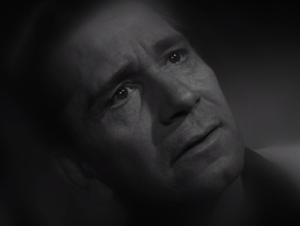
Welcome to the key of imagination. This week we’re talking about the Twilight Zone episode “Perchance to Dream.” We’ll discuss about a potential plot hole that irks me a bit about this episode; we’ll dive into whether or not we can actually be hurt by our dreams, and I’ll tell you about the time I made a poster of a certain famous video game character move with nothing more than my imagination, just like our protagonist Edward Hall. So, grab your keys, and let’s open this door to the fifth dimension.
There are certain great pieces of literature that if I get a chance to sneak them into the classroom, I try to do so. It’s a bit selfish, but it’s selfishness born out of loving to see what young people can do with grand ideas. One of those great works is Shakespeare’s Hamlet, and one of the more often quoted sections of the play is the great “To be or not to be” soliloquy. Within that wonderful speech, Hamlet attempts to work through the value of life against the trials and tribulations of this mortal world. He states, “To die, to sleep – to sleep, perchance to dream – ay, there's the rub, for in this sleep of death what dreams may come…” (Hamlet 3:1). There is no doubt that existence–especially in today’s world of constant chatter and opinions–can become quite wearisome. It is why I often tell my students that your mental and physical health are not problems you fix only when something goes wrong; they are to be maintained along the path of life. People who are in severe crisis are often no longer in a position to help themselves. In this week’s episode of The Twilight Zone, we are introduced to a man in crisis: Edward Hall. Sleep-deprived, frightened, and seemingly alone on his journey–you put these ingredients in a mixing bowl, mix it up, add some heat, and you have bitter stew. You see, whenever Edward goes to sleep, he sees a woman, but not just any woman–Maya, a remnant from the old days, a siren of sorts, beckoning him to his death. But, it’s only a dream, right? That’s true. But, when you add a sensitive heart condition into the mix, excitement of the sort being offered by Maya can prove deadly. With nothing left to lose, Edward visits a professional, a psychologist. As Edward’s head hit’s the couch, his eyes, close for just a moment–but, ultimately, a moment is all it will take. Edward finally succumbs to the pull toward eternal rest.
“Perchance to Dream” is directed by Robert Florey; Teleplay by Charles Beaumont–hey, we have a new name. It’s based on a short story of the same name published in the October 1958 issue of Playboy Magazine. You know I love collecting Twilight Zone memorabilia, so I can honestly say, if I pick up a first printing of Beaumont’s story, it will actually be for the articles.
It’s worth taking a minute to just say that this is our first episode chronologically in terms of television air dates to feature someone else other than Rod Serling in the Teleplay section: Mr. Charles Beaumont. And he would become a major force in the series, as we will see. He is responsible for what is arguably my favorite Twilight Zone episode, which is…well, we’ll get there eventually. But, there are clues. In Zicree’s Twilight Zone Companion, he quotes writer William F Nolan as saying, “Chuck was the perfect Twilight Zone writer,...more than Matheson or Rod Serling, even. Matheson is very much of a realist who can mentally lose himself in these worlds. He doesn’t live in them the way Chuck lived in them. Chuck actually lived in the Twilight Zone” (74). Those are some pretty high praises for Mr. Beaumont, and understandably so. And both he and Serling were fans of Edgar Allan Poe–something the three of us have in common.
“Perchance to Dream” originally aired on November 27, 1959
As for our cast, it stars Richard Conte, plays our leading man, Edward Hall; Suzanne Lloyd is our femme fatale/secretary, Maya, the catwoman/Miss Thomas; and John Larch plays the role of the concerned psychiatrist, Dr. Eliot Rathman. It’s a good cast, and they play their roles well enough, but you’re likely already starting to hear in my tone that I have some issues with this episode. We’ll get to that in a bit.
As for our tidbits, In Grams’ Jr’s Unlocking the Door, there are quite a few tidbits about Beaumont’s surprise at how faithful the production team at The Twilight Zone approached his 1958 story. It seems like at each stage of the process, Beaumont kept waiting for someone to tell him, well, you can’t do that or we can’t show that. For the most part, he saw his vision, as it was intended, come to life. Beaumont wrote, “Throughout the TV filming, Florey (the director), strove for quality” (203). I’ve already brought Zicree’s Twilight Zone Companion into this, but I’ll simply add something else that writer William F Nolan notes about Beaumont, “[Chuck] was always frightened of dreams….He always felt that dreams and reality impinged on each other” (80). I think that comes through well in this episode.
Here are my initial thoughts on the episode. I’m going to be honest here and say that this is not one of my favorites, but it does not have to do with Beaumont’s story. I actually like the story. As mentioned, there is something of Edgar Allan Poe in it that rings quite true to me. The blurriness of the boundaries of reality, for example. Is Maya just a dream; is she really trying to kill him? To its credit, I actually watched this episode twice before I started writing this episode. I wanted to see what thoughts I could pick up. I like his story of being able to make the boat move as a child. I found that fascinating. But, here’s just my opinion, I don’t particularly love the cinematography of the dream sequences–I actually do enjoy the blocking and cinematography of the reality sequences especially the over-the-head shot of when Edward first sits down on the couch. That’s a great camera angle and position. It creates this feeling of empty space, which, to stick with the blurred boundaries theme, is both reassuring and frightening. There is nothing there to get you, but there is also plenty of space for something horrific to arrive. But the dream sequences don’t quite connect the dots for me. I like the acting of both Conte and Lloyd–Lloyd mentioned that she worked really hard on her maniacal laugh, and it shows. It’s right up there with the laugh of Pinto Syke’s sister Ion played by Elen Willard at the end of “The Grave.” But, somehow the chemistry for me is lost between Edward and Maya. I never quite get a steady feeling for the stakes at hand, that mixture of fear and desire. And that takes away a bit of my enjoyment for this episode.
Okay, let’s dive into question 1: Does Edward recognize Miss Thomas, the receptionist, at the beginning of the episode or not?
First, let’s get some psychology/science into the mix. The following comes from the WU Tsai Neuroscience Institute at Stanford University. It’s a lengthy quotation of a piece written by Erica Seigneur, but it’s an important one for our conversation. This was a question that was posed to the Neuroscience department by someone named Ella. : “I read a theory that while dreaming, the brain cannot invent new people out of nowhere. Instead, the brain shows people we've seen while awake, or combines a mix of previously-seen physical features to create a "new" person. How would you prove/disprove this theory? Why does the brain do this?”
“This is a really interesting question, but unfortunately, it’s an impossible question
to answer experimentally. To test this theory, we would need an accurate image of the unknown dream person and a reliable and accurate way to know if the dreamer had ever seen the person in their waking life. This is difficult for a number of reasons. First, our dreams are typically not vivid enough to distinguish the individual facial or body features that would be required to get a precise image of a dream person. Think about your own dreams -- when you dream about someone you know, do you recognize that person because you can see their face clearly or do you just know that it’s them? (Seigneur)
Second, our memories about our dreams are extremely fleeting. We start to forget our dreams as soon as we wake up, making the precise recollection of a person or face extremely difficult. To make the problem worse, when we can’t remember something clearly, our brains have the habit of filling in the gaps with people/places/things from previous experiences or similar events, so even if we did dream of a unique person, if we weren’t able to recall that person while awake, our brains would likely fill in the details with people that we have seen before. (Seigneur)
Okay, you might know where I’m going with this–but maybe not, maybe I don’t even know where I’m about to go with this, but wherever we end up, we’ll get there together. Is it possible that Edward merely used the likeness of Miss Thomas, the receptionist, as a stand-in for our vision of Maya? In other words, if Miss Thomas were blonde, would Maya from his dream description have been blonde? Obviously, Edward had dreams of Maya prior to coming to the office, which, if this theory I’m posing is correct, it would mean that Maya simply takes on the appearance of whichever woman Edward sees beforehand.
Now, I know that this is NOT supposed to be correct. Maya should be the same woman every time; it’s how he knows that she is trying to kill him. But, it would explain a little better why Edward only has somewhat of an odd reaction to the secretary at the very beginning of the episode. You might be wondering, “Joe, maybe you need to see Dr. Rathmann. What’s the big deal?” Well, I would have agreed with you fellow Zoneheads, until I dug a little deeper and went to the source material. Let me just read a little bit from the beginning of Beaumon’t story, “Perchance to Dream.”
“Please sit down,” the psychiatrist said, indicating a somewhat worn leather couch.
Automatically, Hall sat down. Instinctively, he leaned back. Dizziness flooded through him, his eyelids fell like sash weights, the blackness came. He jumped up quickly and slapped his right cheek, then he slapped his left cheek, hard.
“I'm sorry, Doctor,” he said.
The psychiatrist, who was tall and young and not in the least Viennese, nodded. “You prefer to stand?” he asked, gently.
“Prefer?” Hall threw his head back and laughed. “That’s good,” he said. “Prefer!”
“I’m afraid I don’t quite understand.”
“Neither do I, Doctor.” He pinched the flesh of his left hand until it hurt.
That’s the beginning of the story. There is no mention of Hall going into the office and seeing the receptionist. I think Beaumont’s story plays it better than the opening of the actual episode. I want to be clear; I’m not saying that this moment ruins the episode for me. There is a lot to like about it, but I guess, I’m not 100% sure why they changed the way Beaumont had it scripted, especially when you add in the fact that Beaumont was so incredibly happy about how little it was changed from his own story. I’m hoping that some of you out there have some ideas about this and will either leave comments where appropriate or send me your thoughts at keyofimaginationshow@gmail.com.
Question 2: Is Edward killed by his dream, or is it the heart problems that get him?
First let’s jump over to Johns Hopkins medical site to learn about Edward’s heart condition: Rheumatic heart disease. According to the good people at Johns Hopkins, Rheumatic heart disease is a condition in which the heart valves have been permanently damaged by rheumatic fever. The heart valve damage may start shortly after untreated or under-treated streptococcal infection such as strep throat or scarlet fever. An immune response causes an inflammatory condition in the body which can result in on-going valve damage.
In the section of the website where it talks about living with Rheumatic Heart disease, it says the following: You will need to have ongoing follow-up with your healthcare provider to check the condition of your heart. Depending on the amount of heart damage, you may have some activity restrictions. Your healthcare provider may recommend that you take antibiotics for an extended period to prevent another infection of rheumatic fever. (link).
So, the doctor’s advice in the Twilight Zone episode to limit activity is in-keeping with the good doctors at Johns Hopkins. It seems more treatable today with antibiotics, but it can still cause plenty of problems and even severe heart damage if left untreated, so it is still something that needs to be taken seriously.
Now, let’s make our way over to dreamland. I think most of us have probably experienced a nightmare at least once in our lives. And when we wake up from that nightmare, we usually find our heart rates to be higher than normal, so I don’t think I have to bring peer-reviewed scientific research to the discussion to link nightmares and bodily affects; however, I would like to bring in a fascination peer-reviewed article from the journal Sleep that just recently came out in March of 2023 by Allison A. Campbell et all entitled, “Nightmares: an independent risk factor for cardiovascular disease?” Let me read the conclusion section and then we’ll break down what it’s trying to say,
Nightmare frequency and severity among veterans are associated with cardiovascular conditions, even after controlling for PTSD diagnosis. Study findings suggest that nightmares may be an independent risk factor for CVD. Additional research is needed to validate these findings using confirmed diagnoses and explore potential mechanisms. (Campbell).
In other words, nightmares can play a role in cardiovascular health, which means Edward’s concerns about Maya trying to kill him through nightmares might not be so farfetched as we think. What about the connections between death and dreaming? There is ongoing research that is attempting to demystify end-of-life dreams or visions. The following is a summary of research being done on palliative care and dreams taken from a New York Times article for easier digestion.
For their primary study, published in The Journal of Palliative Medicine, the researchers conducted multiple interviews with 59 terminally ill patients admitted to acute care at Hospice Buffalo, a facility furnished in warm woods, with windows that frame views of fountains, gazebos and gardens. Nearly all the patients reported having had dreams or visions. They described the majority of their dreams as comforting. About one in every five was associated with distress, and the remainder felt neutral. (link).
Edward’s dreams are certainly not comforting, and toward the end of his last dream he essentially commits suicide in the dream after he sees Maya in the form of Miss Thomas, thrusting himself through the doctor’s office window and falling 13 stories to the bottom.
Does this get us any closer to answering our question? Is Edward killed by his dreamor by his heart condition? I think the answer is both. It’s the dream that causes his heart distress, and it’s the rheumatic condition that prevents him from being able to shake it off and recover in a normal fashion. And that’s the part of this episode that I find incredibly interesting. It’s quite a conundrum that, upon bringing the science into the equation, actually makes this a more frightening episode. If someone told me this story in real life, I could be persuaded that this is how the individual actually perceived his or her situation. That a recurring dream with the same character was making it difficult for them to sleep at night, and that led to the continuing aggravation of an already present heart condition. That sounds incredibly plausible to me.
When I was very young, 5-7 ish, I had a period of time where I had a recurring nightmare–it wasn’t every night, but it would show up somewhat routinely. It had to do with spiders overwhelming my house and killing my family, and then they would come for me and I would wake up. Pretty terrifying for a young kid. But, I was also somewhat of a weird child in that I don’t carry a lot of emotional baggage with me from the previous day. If I fought with someone on Thursday, by Friday morning, I’m ready to just move on to a new day with that individual. So, these recurring nightmares were terrible, but I had the ability to shake them off even as a little boy and go about my day.
Now, I don’t think it takes Freud to interpret dreams like this. To me, it was always about control. Learning that there are some things in life for which we have no control. That message can sometimes make people feel even worse about life. But, in reality, it’s more about releasing the mental and physical energy that we spend on these providential decision trees so that we CAN focus on the things we have some control over: our reactions to bad times, our choices to help others, what we spend our time doing.
So, when or how did these recurring nightmares stop? Actually, that’s an interesting story as well, one that I might keep in my back pocket for another time. Suffice it to say, they did stop at about age 7 or 8.
Just to tie this back in with our Twilight Zone episode and the question at hand. I don’t think we would be wrong in saying that Edward died because of his heart condition, but he is killed by his dreams. The mind is quite capable of wreaking havoc on our bodies, and if we aren’t able to keep our dream worlds and real world separate, I could easily see where someone could be left in quite a horrific state of existence. As I previously mentioned, this is not one of my favorite episodes, but I do like the way that Richard Conte is playing the character as frenetic, tired, and desperate. It makes me wonder how many people are living similar lives of frenetically tired desperation. I hope it’s none of you out there.
Where did you find your moment of awe, something that moved you or inspired you to think beyond the surface?
My moment of awe for this episode is when Edward is explaining to the doctor how he was able to make a picture move by staring at it long enough. When I was super young, like 6 or 7 years old, I slept over at my cousin's house and he had a poster of Pac-man on the ceiling. Well, I was sleeping on the floor and staring up at that poster, and with the lights off in the room, I could still just barely make out the images of Pac-Man and the ghosts, and at one point, my imagination was making the figures move around a bit. Now, even back then, I knew that they weren’t actually moving, but it was a fascinating experience for me, one that I obviously have never forgotten.
When I rewatched “Perchance to Dream”, I thought about how such an ability would function in real life. Let’s say, you could make a picture of a boat move. As long as you could make it stop when you needed it to. It sounds great, but what if you were walking through an art museum with pictures of horrific creatures–all moving around you. That would be pretty terrifying. To me, that’s an excellent premise for a new Twilight Zone. There’s plenty of meat on that bone, as the cool kids say. I was awe-struck by this story and the idea of what the mind is actually capable of conjuring and why we have to be careful to protect it.
As for my rating, this is a middle-lower-tier episode for me. It’s a great story by Beaumont; it has excellent potential for letting your thoughts wander, but the dream sequences tend to create more separation between reality and fantasy, whereas I think it should be bringing the worlds closer together. There should be more desire, more of a feeling of inevitable collision. “The Hitchhiker” is a great example of an episode that creates a good sense of inevitable collision between protagonist and antagonist.
Next time, we’ll be discussing: “Judgment Night” Here are your questions to consider as you watch.
Question 1: Is this a fitting judgment for Col. Lanser?
Question 2: The scene we get at the end of the episode between Lanser and Mueller, is that part of the moment that is constantly re-lived, and is Mueller actually there with Lanser?
Question 3: What are your moments of awe?
Another one bites the dust, as the great Freddie Mercury put it. As far as announcements and comments, I would like to give a shout-out to Victor Gamboa over at the Outer Limits Podcast. He sent me a very kind message over on X, just welcoming me to the community of podcasting fans of older television shows. Now, Twilight Zone and Outer Limits fans are like cousins; there are strong links and histories between us, even though the two shows differ in quite a few ways. I came to the Outer Limits a bit later in my life than The Twilight Zone, but it’s about as good as you can get in terms of sci-fi–And so is Victor’s Outer Limits Podcast, so thank you, Victor. And I encourage people to check out The Outer Limits Podcast.
We’ve got a few comments to acknowledge from the YouTube channel.
@ken.droid-the-unique noted the following on my “Mr. Denton on Doomsday” video: “Thank you, sir. It's nice to know that some of my mindless entertainment is worthy of some serious thought!”
Thank you, Ken for the kind words. Serling certainly provided us with a lot to think about when it comes to The Twilight Zone. I’m happy to come along for the ride and maybe pick up a few hitchhikers along the way. I can’t think of many more shows worthy of serious thought than the Twilight Zone.
@robagabore comments on “The Loney” video, “It’s ok. Not the best. Ted Knight should have received a credit for his role. It was a pretty big one.”
You know, it’s actually funny you say that. Whenever I see that episode, I always think, why don’t they do more with Knight’s character? I guess the easy answer is time, but they only tease his part in the episode. He has a few really weighty lines that show that not everyone believes Corry is innocent, but they could have done more with that to heighten some of the intensity of the episode, not that it really needed it; it’s a fine episode. Thanks for the thought, Rob.
I’m excited to say that we also have our first Google Form rating response. If you go to thekeyofimagination.com, and you click on a particular episode, that episode has a corresponding Google rating form where you can add your rating and your thoughts on a particular episode. Well, Rob from DC left his rating and thoughts for “The Lonely.” He rates it a middle-top tier. I’ve got no quibbles with that. For his moments of awe, Rob writes, “The bleakness of Corey’s existence is impressive.” You’re not kidding. I’m one of those people who can sit alone quietly in a room for hours, but I’m pretty sure I couldn’t do what Corry does in that episode. It’s pretty terrible. Thanks for taking the time, friend.
Now, any time you put yourself out there into the world, you expose yourself to people who just want to say something unconstructively negative. Honestly, that’s fine. As I always say, even if you hate the show, I’m still going to thank you for taking the time to check it out. And that’s really the thing to keep in mind when you’re doing something like this. They tried the show and it wasn’t for them. That’s okay. This is going to be a show with probably a small, but hopefully tight-knit community. That’s just fine with me. A small but dedicated community can do a lot of good in the world.
Head over to thekeyofimagination.com to continue our conversation. You can rate this episode, learn more about me, watch previous episodes of the show, and check out my curios page where I showcase some of the Twilight Zone trinkets I’ve bought over the years. I encourage people to email me thoughts and comments, whether it’s about a particular Twilight Zone episode, your rating for an episode, or about the Key of Imagination Show. You can get those to me as a text email, an audio clip, or even a video clip of roughly no more than 5 minutes to keyofimaginationshow@gmail.com. Keep in mind, we’re trying to maintain a family-friendly atmosphere. If you would rather I not use your comments on the show, please indicate that so I can respect your decision.
If you enjoyed the show, I ask that you please take a moment and do one of the following to help build our community. Rate the show, review the podcast, leave comments, thumbs up, all of the usual algorithmic gymnastics. That will help get the show in front of more people and help us build our community of Twilight Zone fans. However, even if you do none of that and absolutely hated every minute of this, I would still like to thank you for spending some time with me. Until next time, remember, all doors are open to those who possess the key of imagination.