
The Twilight Zone Season 1: Episode 10
"Judgment Night"
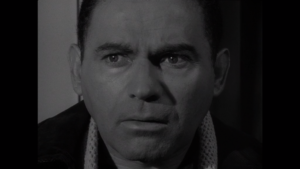
Welcome to the Key of Imagination. Today we’re discussing the episode Judgment Night. We’ll talk about how much punishment is enough for Captain Lanser, whether Mueller is a part of Lanser’s recurring nightmare, and we’ll even get into some Dante, Prometheus, and take a stop in purgatory. So, grab your keys, and let’s open this door to the fifth dimension.
We often talk about the idea of the pearly gates of heaven, and how once there, you’ll be greeted by St. Peter and his big book of your earthly deeds–mostly good, I would imagine. After all, you’re standing at the gates of heaven. But, there is another gate, one made famous by the great poet Dante Aligheri and his Divine Comedy. What should greet you upon standing before the entryway into the inferno? No, not some huge beast–something far worse, an inscription. Abandon hope, all ye who enter. Now, you might be asking, Joe, you’re doing it again; you’re being awfully dramatic here. How is an inscription worse than a huge hulking beast? Well, dear listeners, because we can comprehend a beast; we can come to grips with a tangible destruction, but I’m not sure that most people can actually envision what a world with truly no hope is like–although, I’m sure there are some of you out there who can. In this week’s episode, we’re introduced to a man named Carl Lanser in the time of World War II. As adults, we know that war is a complex subject, but there has always been a part of the ethos of man that has recognized the importance of preserving humanity, especially in times of war, something that our Rod Serling knew all too well as a paratrooper for the United States Army during WWII. On this day, our protagonist, Carl Lanser finds himself on a cruise aboard the ship the Queen of Glasgow, populated by all types of lovely people, men, women, and children. Lanser can’t seem to shake this feeling that something is about to happen, something terrible. But, he can’t quite put all of the pieces of the puzzle together until it’s too late. The Queen of Glasgow has sailed right into the crosshairs of a German submarine, piloted by a man who doesn’t believe in silly things like souls, honor, and the screams of children. But, there’s a twist of fate in store for our protagonist. The man behind the orders to sink the Queen of Glasgow is none other than the same man who is trying to warn the people on board: Carl Lanser, or should I say, Captain Lanser of the German forces. And since that fateful day when he sunk the Queen of Glasgow, Lanser will have to bear witness to his atrocity, to be a part of their fears, screams, and final moments. As the Carl Lanser aboard the Glasgow abandons ship, the one aboard the submarine is left to abandon all hope.
“Judgment Night is directed: by John Brahm, teleplay by Rod Serling, and it originally aired on December 4th, 1959. As for our cast, Nehemiah Persoff carries the bulk of the weight in the episode as Captain Carl Lanser, but the entire cast does a particularly wonderful job of maintaining this sense of both distance and somehow familiarity. In other words, it’s clear they don’t know Lanser, but there’s this kind of fraternal care that makes it quite difficult to watch them as the ship is being attacked and finally sinks. Fantastic cast.
As for our episode tidbits, In Grams’ Jr.’s Unlocking the Door, there is a really interesting quotation from Serling about where he got the idea for this episode. Serling states, “I got it while listening to a sermon on the hereafter. I’ve never been able to stomach a concept of ‘hell,’ at least the Dante version. It struck me that purgatory can be given modern dress, which is what happened in this show” (206-7).
About this Purgatory comment, we know that Serling was an incredibly well-read man, so his bringing up of Dante and Purgatory is not a throwaway line. Furthermore, for anyone who has watched the Twilight Zone series, you know that Hell and the Devil come up a few times. In fact, it wasn’t all that long ago that we were talking about Cadwallader, or the Devil, in “Escape Clause.” I bring this up because it makes this line about Purgatory all the more intriguing for our conversation. Serling would have known that the purpose of Purgatory in the Roman Catholic tradition, even if only through his reading of Dante, is the expiation, the removal, of sins in preparation for admission to Heaven. I’ve written about Dante before and studied The Divine Comedy. I never would have thought of this episode as a kind of Purgatory, but there is one section of the episode where this quotation from Serling has changed the way I actually view or interpret this story. We’ll get to that section a little later.
I don’t think it’s a big surprise that I like this episode, but I will bring up something specific about it that I like more than others. Today, our films and television tend to do a rather lackluster job of sustained suspense. One of the greatest movies to do this was the original Alien film. Don’t get me wrong; I love me some Aliens with Sigourney Weaver, Bill Paxton and Michael Biehn; it’s a thrillride, but the original Alien was a master class in sustained suspense, and I feel like this episode does a great job of that as well. I think this is also one of those episodes that the more you reflect on it, the more you enjoy it. You find more philosophical and ethical concerns to grapple with. So, without further ado, let’s actually get into some of those philosophical concerns.
Let’s dive into question 1: Is this a fitting judgment for Col. Lanser? This is one of those questions that seems easy on the surface but when you dive into it, it’s far more complex. Judgment Night’s recurring nightmare of torment is far from original in its core concept of damnation. We, as a species, have a long history of recording ways that we envision punishment that extend beyond temporal norms. Let’s revisit some examples, and by the end, we should be better equipped to answer the question. As I was thinking about texts and stories that I’ve taught before involving great damnation, there are two that come immediately to mind, but they are not the only ones: Hesiod’s The Theogony and the story of Prometheus and Dante’s Inferno. I’ve taught John Milton’s Paradise Lost as well quite a few times, but I’m going to hold on to that one for a future episode. Let’s revisit Hesiod’s Theogony and remind ourselves of the story of Prometheus.
Prometheus’ torment is one that tends to stay in our minds when we first learn it. It’s so specific and filled with interesting symbolism. Every day, an eagle, an often-cited emblem of Zeus, visits Prometheus who is chained to a rock, and the eagle eats the god’s liver. Now, if you think that’s pretty terrible, just wait. There’s more. Every night Prometheus’ liver grows back and the same thing happens the next day. What did Prometheus do? He stole fire from Mt. Olympus and gave it to us mere mortals. There are two interesting parts to this punishment: first, you have the physical pain of the event; yes, that definitely sounds like it would hurt; however, and this part is probably worse. There’s the psychological pain of knowing that it will never end; that the last time the eagle came is not the last time. Often times, people read about Prometheus’ punishment and immediately feel a sense of pity for him. After all, he is being punished for us, for our benefit and so he takes his place as a kind of messianic figure of sorts. In some versions of the myth, Prometheus is eventually set free by Heracles, so if you feel sorry for him, no worries.
It’s easy to root for Prometheus, even though he was technically wrong. He did steal something that wasn’t his, but because we believe in justice as well, we’re often willing to overlook the wrong that is done if there is a greater sense of good at the other end. That sounds a bit like some versions of Batman as well, doesn’t it? But, what happens when we feel that the individual deserves their suffering? Is there a point where condemning someone for suffering becomes pointless? I want to be clear; I’m not saying that there isn’t evil, or that we aren’t justified in calling out evil when it’s in front of us. What I mean is, is there a point at which suffering in the name of justice becomes simply the enjoyment of suffering, and is that good for us as a species? On that happy note, let’s turn to Dante’s Inferno to go even a bit deeper into punishments.
Pop culturally speaking, most people seem to be at least somewhat acquainted with Dante’s Inferno or hell from his Divine Comedy. However, for those of you who have still not read it because you think it’s pretty straightforward, it’s really not. Hell in Dante’s world is actually quite complex. Take Capanaeus for a moment, one of the 7 champions who made war against Thebes. Capanaeus was so arrogant, he stood against the wall of Thebes and proclaimed that not even Zeus himself could stop him. If you know your Greek Mythology at all, you already know that this doesn’t end well. He ends up with a lightning bolt in his ear. When we find Capanaeus in Dante’s hell in canto 14, verse 51, we see a man who is being rained down upon with fire, but Capanaeus doesn’t care about the fire; you see he refuses to give his punisher the satisfaction of seeing him in pain. Now that is some commitment. Let’s take a quick look at his section of the Inferno.
Thus was descending the eternal heat,
Whereby the sand was set on fire, like tinder
Beneath the steel, for doubling of the dole.
Without repose forever was the dance
Of miserable hands, now there, now here,
Shaking away from off them the fresh gleeds.
"Master," began I, "thou who overcomest
All things except the demons dire, that issued
Against us at the entrance of the gate,
Who is that mighty one who seems to heed not
The fire, and lieth lowering and disdainful,
So that the rain seems not to ripen him?"
And he himself, who had become aware
That I was questioning my Guide about him,
Cried: "Such as I was living, am I, dead.
If Jove should weary out his smith, from whom
He seized in anger the sharp thunderbolt,
Wherewith upon the last day I was smitten,
And if he wearied out by turns the others
In Mongibello at the swarthy forge,
Vociferating, 'Help, good Vulcan, help!'
Even as he did there at the fight of Phlegra,
And shot his bolts at me with all his might,
He would not have thereby a joyous vengeance."
Then did my Leader speak with such great force,
That I had never heard him speak so loud:
"O Capaneus, in that is not extinguished
Thine arrogance, thou punished art the more;
Not any torment, saving thine own rage,
Would be unto thy fury pain complete." (link)
Oh, come on! How can you not love this stuff. Capanaeas doesn’t even realize at this point how much his own arrogance is making his suffering worse. Aren’t we all guilty of that sometimes. I’ve been in a few fiery rain storms of my own making. I’ll just leave it at that.
To bring this all back to our episode and question, Lanser is actually an interesting kind of Capanaeus; he doesn’t believe that by bearing his suffering he is bringing war upon God. but, Lanser is a supremely arrogant man. He does laugh at Mueller’s thoughts that what they are doing is damning their very souls, And although the German submarine captain is visibly shaken by the end of his talk with Mueller, it’s too late; the deed is done. He has cemented a place for himself in the hell portion of the Twilight Zone–a truly horrible place. Is it a fitting judgment for Lanser? The secular part of me says, yes. But, as for the theological arguments, I leave that to higher powers.
I will simply add that Serling’s comment that I referenced in the tidbit section indicates that Serling believes that there is even room for grace and forgiveness for Lanser. If this scenario is purgatory and not hell, there will be a time when Lanser’s punishment will end, after he has paid for his sins, and if we take this notion of purgatory to its end, there is even a possibility that Lanser will go to heaven. I know that this will not sit well with people, and feel free to share your thoughts about it. I’ll simply say, Serling’s thoughts here are coming from a place of a strong belief in forgiveness and mercy, and you might disagree with his assessment, but I think you have to respect where they’re coming from.
Question 2: The scene we get at the end of the episode between Lanser and Mueller, is that part of the moment that is constantly re-lived, and is Mueller actually there with Lanser?
I’ve thought about this one for a bit. it seems to me that the scene with Mueller is a part of the entire repeated scene, that Lanser relives the moment when one of his men explains that what they are doing is evil and that they are damning themselves. Despite John Lyly’s often-quoted proverb that all is fair in love and war, that is simply not the case–nor should it be. You can clearly see the dread on Lanser’s face at the end of the exchange between the two men. He does experience this sudden realization that what he has done can have existential consequences beyond earth. Let’s expand our thoughts here and include Mueller into our conversation. I’m going to read the lines from a part of the exchange between Lanser and Mueller having to do with being damned in the eyes of God. It begins with Lanser asking the following:
“So what if we are damned. What will happen then?” to this Mueller responds:
“I’ve had dreams about it. Perhaps there is a special kind of hell for people like us. Perhaps to be damned is to have a fate like those people on that ship–to suffer as they suffered. And to die as they die.”
Okay, you can clearly hear Dante in these lines–this idea that your punishment connects with what you’ve done in some meaningful way. You also have this connection to revelation through prophetic dreaming, which is exactly what happens here. Mueller is, in fact, revealing to Lanser what is going to happen to him. Does it help us answer if Mueller is a part of all of this? In some ways, yes. Mueller continually includes himself in this discussion: us, we, etc. It’s clear that he believes that he will be judged and punished accordingly; however, we don’t see Mueller on the Queen of Glasgow or on his own version of that ship. But, it could be that Mueller’s punishment is to always be connected with Lanser’s punishment, to always have to be on the ship with Lanser and constantly destroying the Queen of Glasgow, to not die a million times, as he says to Lanser, but to live a million times. To have to bear witness to his decision to follow these orders. This notion of just following orders will come up again in the episode “Death’s Head Revisited.” That, to me, would certainly count as a kind of hell. And Mueller himself seems to accept his fate. So, I do think that Mueller is there, and he is a part of this nightmare.
Where did you find your moment of awe, something that moved you or inspired you to think beyond the surface? One of my moments of awe has to do with something that I see us struggle with a lot in today’s culture: a kind of war. In the exchange between Lanser and Mueller, when Mueller starts to question their having killed the people on the Queen of Glasgow without warning them, Lanser responds: “You have sentiment, Mueller, but no brains.” Is Mueller’s logic right at this point in the conversation? If they had warned the people aboard the Queen, a message would have likely been sent out to someone for help. The position of Lanser’s boat would have been discovered, and that would have placed them in peril. It doesn’t make sense to warn them in terms of pure logic and war. Most of our existence is probably best governed by logic and facts, but there are times when the heart and the soul try to steer us toward a different kind of truth, a truth that is valued not on logical merit but on its merit to the human condition. It’s not always easy to heed these warnings and ignore logic, but I do believe that sometimes we have to. I’ve never been in combat; and I don’t want to pretend to understand how to make such decisions in these terrible moments. But, Rod Serling was in combat; he did see these moments, and if one looks closely enough, one can see Serling’s thoughts come through in the Twilight Zone episodes that deal with war. And, I think more times than not, Serling is trying to tell us there is a place for the heart and soul at the table when discussing matters of life, death, good, and evil. And that we should always find time to at least listen to what they have to say.
As for my rating, This episode is quite horrific. It’s a haunting reminder that our actions have consequences. The thought of reliving something over and over again is terrifying. I have always found this episode to be both jarring and enveloping. This is an upper-lower tier episode for me. I can watch this episode over and over and get placed into a kind of trance for about 30 minutes after it has ended.
Next time, we’ll be discussing: “When the Sky was Opened.” Here are your questions to consider as you watch. As always, beware of potential spoilers in the questions:
Question 1: We may not actually disappear, but do we, as humans, have a kind of phenomenon where we feel as though we’ve been removed from the world?
Question 2: We now have so many movies and shows that talk about time and multiverses, does our knowledge today impact how we look at the way Rod Serling handled this episode?
Question 3: What are your moments of awe?
Well, hopefully that episode went well and you won’t judge me too harshly if it was not up to standards. I suppose a kind of hell would be me redoing the same episode over and over again and just bearing witness to my own incompetence and inability to find the right words to express my thoughts. Unfortunately, that happens more often than I would like to admit, but hopefully I entertained you all a bit and made you think a little bit in relation to The Twilight Zone.
A quick announcement. You might have noticed that I’m no longer including my little greenscreen openings with the main episodes. After listening to some sage advice and reflecting on it myself, it became clear that it wasn’t really functioning as I intended. It ended up becoming like listening to two different introductions, so I’ll be keeping those separate from now on. Just like myself, the show is a work in progress, but I appreciate all of you who reach out with kind words and constructive feedback. Exciting news: the Rod Serling Memorial Foundation has announced a tentative date for the unveiling of the Rod Serling statue in Recreation Park in Binghamton, NY, which is only a hop-skip-and-a-jump away from me in Albany. The tentative date is May 18th. And I believe the dates for Serling Fest have also been announced as August 16-18th in Binghamton, NY. That’s not too far away from me in Albany, so I’m definitely going to try and make my way to those. Also, if you have any additional money in between the cushions of your sofa or car seats, head over to rodserling.com and throw some change their way. They could still use some help to pay for shipping, the base of the statue, and other incidentals.
We do have a few comments from YouTube to highlight. Steven commented on the “Escape Clause” episode, “Keep up the great work.” Thanks, Steven. I appreciate the kind words, and I’m continually working on getting better at this from all directions: the writing, the production, the connection with the audience. These positive words really help keep me motivated to work on improvements. Matt Campbell commented on “The Walking Distance episode: "Great insight. Keep working on your craft, but main thing is you are on the exact right path. Keep doing what you're doing" Matt, thank you, friend. Sometimes we throw out these kind little phrases and when we make them, we don’t think much of it, but sometimes the person on the receiving end, really needed to hear that little bit of positivity in that moment. So, thank you. And I absolutely will keep working on the craft. My students are sometimes shocked when I tell them, “I’ve never written a perfect paper, so I don’t expect perfect papers from you. But, work hard, and say something that you believe might be valuable to the world. That’s what I hope to be doing here. I hope that I can provide some moments of reflection for us.
Head over to thekeyofimagination.com to continue our conversation. You can rate this episode, learn more about me, watch previous episodes of the show, and check out my curios page where I showcase some of the Twilight Zone trinkets I’ve bought over the years. I encourage people to email me thoughts and comments, whether it’s about a particular Twilight Zone episode, your ranking for an episode, or about the Key of Imagination Show. You can get those to me as a text email, an audio clip, or even a video clip of roughly no more than 5 minutes to keyofimaginationshow@gmail.com. Keep in mind, we’re trying to maintain a family-friendly atmosphere. If you would rather I not use your comments on the show, please indicate that so I can respect your decision.
If you enjoyed the show, I ask that you please take a moment and do one of the following to help build our community. Rate the show, review the podcast, leave comments, thumbs up, all of the usual algorithmic gymnastics. That will help get the show in front of more people and help us build our community of Twilight Zone fans. However, even if you do none of that and absolutely hated every minute of this, I would still like to thank you for spending some time with me. Until next time, remember, all doors are open to those who possess the key of imagination.
We often talk about the idea of the pearly gates of heaven, and how once there, you’ll be greeted by St. Peter and his big book of your earthly deeds–mostly good, I would imagine. After all, you’re standing at the gates of heaven. But, there is another gate, one made famous by the great poet Dante Aligheri and his Divine Comedy. What should greet you upon standing before the entryway into the inferno? No, not some huge beast–something far worse, an inscription. Abandon hope, all ye who enter. Now, you might be asking, Joe, you’re doing it again; you’re being awfully dramatic here. How is an inscription worse than a huge hulking beast? Well, dear listeners, because we can comprehend a beast; we can come to grips with a tangible destruction, but I’m not sure that most people can actually envision what a world with truly no hope is like–although, I’m sure there are some of you out there who can. In this week’s episode, we’re introduced to a man named Carl Lanser in the time of World War II. As adults, we know that war is a complex subject, but there has always been a part of the ethos of man that has recognized the importance of preserving humanity, especially in times of war, something that our Rod Serling knew all too well as a paratrooper for the United States Army during WWII. On this day, our protagonist, Carl Lanser finds himself on a cruise aboard the ship the Queen of Glasgow, populated by all types of lovely people, men, women, and children. Lanser can’t seem to shake this feeling that something is about to happen, something terrible. But, he can’t quite put all of the pieces of the puzzle together until it’s too late. The Queen of Glasgow has sailed right into the crosshairs of a German submarine, piloted by a man who doesn’t believe in silly things like souls, honor, and the screams of children. But, there’s a twist of fate in store for our protagonist. The man behind the orders to sink the Queen of Glasgow is none other than the same man who is trying to warn the people on board: Carl Lanser, or should I say, Captain Lanser of the German forces. And since that fateful day when he sunk the Queen of Glasgow, Lanser will have to bear witness to his atrocity, to be a part of their fears, screams, and final moments. As the Carl Lanser aboard the Glasgow abandons ship, the one aboard the submarine is left to abandon all hope.
“Judgment Night is directed: by John Brahm, teleplay by Rod Serling, and it originally aired on December 4th, 1959. As for our cast, Nehemiah Persoff carries the bulk of the weight in the episode as Captain Carl Lanser, but the entire cast does a particularly wonderful job of maintaining this sense of both distance and somehow familiarity. In other words, it’s clear they don’t know Lanser, but there’s this kind of fraternal care that makes it quite difficult to watch them as the ship is being attacked and finally sinks. Fantastic cast.
As for our episode tidbits, In Grams’ Jr.’s Unlocking the Door, there is a really interesting quotation from Serling about where he got the idea for this episode. Serling states, “I got it while listening to a sermon on the hereafter. I’ve never been able to stomach a concept of ‘hell,’ at least the Dante version. It struck me that purgatory can be given modern dress, which is what happened in this show” (206-7).
About this Purgatory comment, we know that Serling was an incredibly well-read man, so his bringing up of Dante and Purgatory is not a throwaway line. Furthermore, for anyone who has watched the Twilight Zone series, you know that Hell and the Devil come up a few times. In fact, it wasn’t all that long ago that we were talking about Cadwallader, or the Devil, in “Escape Clause.” I bring this up because it makes this line about Purgatory all the more intriguing for our conversation. Serling would have known that the purpose of Purgatory in the Roman Catholic tradition, even if only through his reading of Dante, is the expiation, the removal, of sins in preparation for admission to Heaven. I’ve written about Dante before and studied The Divine Comedy. I never would have thought of this episode as a kind of Purgatory, but there is one section of the episode where this quotation from Serling has changed the way I actually view or interpret this story. We’ll get to that section a little later.
I don’t think it’s a big surprise that I like this episode, but I will bring up something specific about it that I like more than others. Today, our films and television tend to do a rather lackluster job of sustained suspense. One of the greatest movies to do this was the original Alien film. Don’t get me wrong; I love me some Aliens with Sigourney Weaver, Bill Paxton and Michael Biehn; it’s a thrillride, but the original Alien was a master class in sustained suspense, and I feel like this episode does a great job of that as well. I think this is also one of those episodes that the more you reflect on it, the more you enjoy it. You find more philosophical and ethical concerns to grapple with. So, without further ado, let’s actually get into some of those philosophical concerns.
Let’s dive into question 1: Is this a fitting judgment for Col. Lanser? This is one of those questions that seems easy on the surface but when you dive into it, it’s far more complex. Judgment Night’s recurring nightmare of torment is far from original in its core concept of damnation. We, as a species, have a long history of recording ways that we envision punishment that extend beyond temporal norms. Let’s revisit some examples, and by the end, we should be better equipped to answer the question. As I was thinking about texts and stories that I’ve taught before involving great damnation, there are two that come immediately to mind, but they are not the only ones: Hesiod’s The Theogony and the story of Prometheus and Dante’s Inferno. I’ve taught John Milton’s Paradise Lost as well quite a few times, but I’m going to hold on to that one for a future episode. Let’s revisit Hesiod’s Theogony and remind ourselves of the story of Prometheus.
Prometheus’ torment is one that tends to stay in our minds when we first learn it. It’s so specific and filled with interesting symbolism. Every day, an eagle, an often-cited emblem of Zeus, visits Prometheus who is chained to a rock, and the eagle eats the god’s liver. Now, if you think that’s pretty terrible, just wait. There’s more. Every night Prometheus’ liver grows back and the same thing happens the next day. What did Prometheus do? He stole fire from Mt. Olympus and gave it to us mere mortals. There are two interesting parts to this punishment: first, you have the physical pain of the event; yes, that definitely sounds like it would hurt; however, and this part is probably worse. There’s the psychological pain of knowing that it will never end; that the last time the eagle came is not the last time. Often times, people read about Prometheus’ punishment and immediately feel a sense of pity for him. After all, he is being punished for us, for our benefit and so he takes his place as a kind of messianic figure of sorts. In some versions of the myth, Prometheus is eventually set free by Heracles, so if you feel sorry for him, no worries.
It’s easy to root for Prometheus, even though he was technically wrong. He did steal something that wasn’t his, but because we believe in justice as well, we’re often willing to overlook the wrong that is done if there is a greater sense of good at the other end. That sounds a bit like some versions of Batman as well, doesn’t it? But, what happens when we feel that the individual deserves their suffering? Is there a point where condemning someone for suffering becomes pointless? I want to be clear; I’m not saying that there isn’t evil, or that we aren’t justified in calling out evil when it’s in front of us. What I mean is, is there a point at which suffering in the name of justice becomes simply the enjoyment of suffering, and is that good for us as a species? On that happy note, let’s turn to Dante’s Inferno to go even a bit deeper into punishments.
Pop culturally speaking, most people seem to be at least somewhat acquainted with Dante’s Inferno or hell from his Divine Comedy. However, for those of you who have still not read it because you think it’s pretty straightforward, it’s really not. Hell in Dante’s world is actually quite complex. Take Capanaeus for a moment, one of the 7 champions who made war against Thebes. Capanaeus was so arrogant, he stood against the wall of Thebes and proclaimed that not even Zeus himself could stop him. If you know your Greek Mythology at all, you already know that this doesn’t end well. He ends up with a lightning bolt in his ear. When we find Capanaeus in Dante’s hell in canto 14, verse 51, we see a man who is being rained down upon with fire, but Capanaeus doesn’t care about the fire; you see he refuses to give his punisher the satisfaction of seeing him in pain. Now that is some commitment. Let’s take a quick look at his section of the Inferno.
Thus was descending the eternal heat,
Whereby the sand was set on fire, like tinder
Beneath the steel, for doubling of the dole.
Without repose forever was the dance
Of miserable hands, now there, now here,
Shaking away from off them the fresh gleeds.
"Master," began I, "thou who overcomest
All things except the demons dire, that issued
Against us at the entrance of the gate,
Who is that mighty one who seems to heed not
The fire, and lieth lowering and disdainful,
So that the rain seems not to ripen him?"
And he himself, who had become aware
That I was questioning my Guide about him,
Cried: "Such as I was living, am I, dead.
If Jove should weary out his smith, from whom
He seized in anger the sharp thunderbolt,
Wherewith upon the last day I was smitten,
And if he wearied out by turns the others
In Mongibello at the swarthy forge,
Vociferating, 'Help, good Vulcan, help!'
Even as he did there at the fight of Phlegra,
And shot his bolts at me with all his might,
He would not have thereby a joyous vengeance."
Then did my Leader speak with such great force,
That I had never heard him speak so loud:
"O Capaneus, in that is not extinguished
Thine arrogance, thou punished art the more;
Not any torment, saving thine own rage,
Would be unto thy fury pain complete." (link)
Oh, come on! How can you not love this stuff. Capanaeas doesn’t even realize at this point how much his own arrogance is making his suffering worse. Aren’t we all guilty of that sometimes. I’ve been in a few fiery rain storms of my own making. I’ll just leave it at that.
To bring this all back to our episode and question, Lanser is actually an interesting kind of Capanaeus; he doesn’t believe that by bearing his suffering he is bringing war upon God. but, Lanser is a supremely arrogant man. He does laugh at Mueller’s thoughts that what they are doing is damning their very souls, And although the German submarine captain is visibly shaken by the end of his talk with Mueller, it’s too late; the deed is done. He has cemented a place for himself in the hell portion of the Twilight Zone–a truly horrible place. Is it a fitting judgment for Lanser? The secular part of me says, yes. But, as for the theological arguments, I leave that to higher powers.
I will simply add that Serling’s comment that I referenced in the tidbit section indicates that Serling believes that there is even room for grace and forgiveness for Lanser. If this scenario is purgatory and not hell, there will be a time when Lanser’s punishment will end, after he has paid for his sins, and if we take this notion of purgatory to its end, there is even a possibility that Lanser will go to heaven. I know that this will not sit well with people, and feel free to share your thoughts about it. I’ll simply say, Serling’s thoughts here are coming from a place of a strong belief in forgiveness and mercy, and you might disagree with his assessment, but I think you have to respect where they’re coming from.
Question 2: The scene we get at the end of the episode between Lanser and Mueller, is that part of the moment that is constantly re-lived, and is Mueller actually there with Lanser?
I’ve thought about this one for a bit. it seems to me that the scene with Mueller is a part of the entire repeated scene, that Lanser relives the moment when one of his men explains that what they are doing is evil and that they are damning themselves. Despite John Lyly’s often-quoted proverb that all is fair in love and war, that is simply not the case–nor should it be. You can clearly see the dread on Lanser’s face at the end of the exchange between the two men. He does experience this sudden realization that what he has done can have existential consequences beyond earth. Let’s expand our thoughts here and include Mueller into our conversation. I’m going to read the lines from a part of the exchange between Lanser and Mueller having to do with being damned in the eyes of God. It begins with Lanser asking the following:
“So what if we are damned. What will happen then?” to this Mueller responds:
“I’ve had dreams about it. Perhaps there is a special kind of hell for people like us. Perhaps to be damned is to have a fate like those people on that ship–to suffer as they suffered. And to die as they die.”
Okay, you can clearly hear Dante in these lines–this idea that your punishment connects with what you’ve done in some meaningful way. You also have this connection to revelation through prophetic dreaming, which is exactly what happens here. Mueller is, in fact, revealing to Lanser what is going to happen to him. Does it help us answer if Mueller is a part of all of this? In some ways, yes. Mueller continually includes himself in this discussion: us, we, etc. It’s clear that he believes that he will be judged and punished accordingly; however, we don’t see Mueller on the Queen of Glasgow or on his own version of that ship. But, it could be that Mueller’s punishment is to always be connected with Lanser’s punishment, to always have to be on the ship with Lanser and constantly destroying the Queen of Glasgow, to not die a million times, as he says to Lanser, but to live a million times. To have to bear witness to his decision to follow these orders. This notion of just following orders will come up again in the episode “Death’s Head Revisited.” That, to me, would certainly count as a kind of hell. And Mueller himself seems to accept his fate. So, I do think that Mueller is there, and he is a part of this nightmare.
Where did you find your moment of awe, something that moved you or inspired you to think beyond the surface? One of my moments of awe has to do with something that I see us struggle with a lot in today’s culture: a kind of war. In the exchange between Lanser and Mueller, when Mueller starts to question their having killed the people on the Queen of Glasgow without warning them, Lanser responds: “You have sentiment, Mueller, but no brains.” Is Mueller’s logic right at this point in the conversation? If they had warned the people aboard the Queen, a message would have likely been sent out to someone for help. The position of Lanser’s boat would have been discovered, and that would have placed them in peril. It doesn’t make sense to warn them in terms of pure logic and war. Most of our existence is probably best governed by logic and facts, but there are times when the heart and the soul try to steer us toward a different kind of truth, a truth that is valued not on logical merit but on its merit to the human condition. It’s not always easy to heed these warnings and ignore logic, but I do believe that sometimes we have to. I’ve never been in combat; and I don’t want to pretend to understand how to make such decisions in these terrible moments. But, Rod Serling was in combat; he did see these moments, and if one looks closely enough, one can see Serling’s thoughts come through in the Twilight Zone episodes that deal with war. And, I think more times than not, Serling is trying to tell us there is a place for the heart and soul at the table when discussing matters of life, death, good, and evil. And that we should always find time to at least listen to what they have to say.
As for my rating, This episode is quite horrific. It’s a haunting reminder that our actions have consequences. The thought of reliving something over and over again is terrifying. I have always found this episode to be both jarring and enveloping. This is an upper-lower tier episode for me. I can watch this episode over and over and get placed into a kind of trance for about 30 minutes after it has ended.
Next time, we’ll be discussing: “When the Sky was Opened.” Here are your questions to consider as you watch. As always, beware of potential spoilers in the questions:
Question 1: We may not actually disappear, but do we, as humans, have a kind of phenomenon where we feel as though we’ve been removed from the world?
Question 2: We now have so many movies and shows that talk about time and multiverses, does our knowledge today impact how we look at the way Rod Serling handled this episode?
Question 3: What are your moments of awe?
Well, hopefully that episode went well and you won’t judge me too harshly if it was not up to standards. I suppose a kind of hell would be me redoing the same episode over and over again and just bearing witness to my own incompetence and inability to find the right words to express my thoughts. Unfortunately, that happens more often than I would like to admit, but hopefully I entertained you all a bit and made you think a little bit in relation to The Twilight Zone.
A quick announcement. You might have noticed that I’m no longer including my little greenscreen openings with the main episodes. After listening to some sage advice and reflecting on it myself, it became clear that it wasn’t really functioning as I intended. It ended up becoming like listening to two different introductions, so I’ll be keeping those separate from now on. Just like myself, the show is a work in progress, but I appreciate all of you who reach out with kind words and constructive feedback. Exciting news: the Rod Serling Memorial Foundation has announced a tentative date for the unveiling of the Rod Serling statue in Recreation Park in Binghamton, NY, which is only a hop-skip-and-a-jump away from me in Albany. The tentative date is May 18th. And I believe the dates for Serling Fest have also been announced as August 16-18th in Binghamton, NY. That’s not too far away from me in Albany, so I’m definitely going to try and make my way to those. Also, if you have any additional money in between the cushions of your sofa or car seats, head over to rodserling.com and throw some change their way. They could still use some help to pay for shipping, the base of the statue, and other incidentals.
We do have a few comments from YouTube to highlight. Steven commented on the “Escape Clause” episode, “Keep up the great work.” Thanks, Steven. I appreciate the kind words, and I’m continually working on getting better at this from all directions: the writing, the production, the connection with the audience. These positive words really help keep me motivated to work on improvements. Matt Campbell commented on “The Walking Distance episode: "Great insight. Keep working on your craft, but main thing is you are on the exact right path. Keep doing what you're doing" Matt, thank you, friend. Sometimes we throw out these kind little phrases and when we make them, we don’t think much of it, but sometimes the person on the receiving end, really needed to hear that little bit of positivity in that moment. So, thank you. And I absolutely will keep working on the craft. My students are sometimes shocked when I tell them, “I’ve never written a perfect paper, so I don’t expect perfect papers from you. But, work hard, and say something that you believe might be valuable to the world. That’s what I hope to be doing here. I hope that I can provide some moments of reflection for us.
Head over to thekeyofimagination.com to continue our conversation. You can rate this episode, learn more about me, watch previous episodes of the show, and check out my curios page where I showcase some of the Twilight Zone trinkets I’ve bought over the years. I encourage people to email me thoughts and comments, whether it’s about a particular Twilight Zone episode, your ranking for an episode, or about the Key of Imagination Show. You can get those to me as a text email, an audio clip, or even a video clip of roughly no more than 5 minutes to keyofimaginationshow@gmail.com. Keep in mind, we’re trying to maintain a family-friendly atmosphere. If you would rather I not use your comments on the show, please indicate that so I can respect your decision.
If you enjoyed the show, I ask that you please take a moment and do one of the following to help build our community. Rate the show, review the podcast, leave comments, thumbs up, all of the usual algorithmic gymnastics. That will help get the show in front of more people and help us build our community of Twilight Zone fans. However, even if you do none of that and absolutely hated every minute of this, I would still like to thank you for spending some time with me. Until next time, remember, all doors are open to those who possess the key of imagination.