
The Twilight Zone Season 1: Episode 13
"The Four of us are Dying"
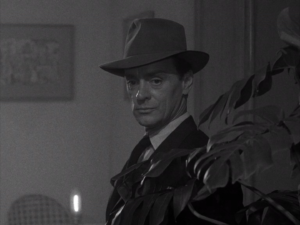
Introduction
Welcome to the Key of Imagination. This week we’re taking a look at the Twilight Zone episode “The Four of us are Dying.” We’ll talk about our fascination with shapeshifting and impersonation; we’ll take a bit of a fun dive into what it might be like to actually have such a gift, and I’ll talk about my moments of awe. So, grab your keys and let’s open this door to the fifth dimension.
Plot exposition
Oscar Wilde famously quipped, “Imitation is the sincerest form of flattery.” Therefore, when someone steals your identity and loads up a whole bunch of money on your credit cards and removes all of your savings from your bank accounts, remember: they are just trying to flatter you. In our Twilight Zone episode this week, our main protagonist, Arch Hammer, is spreading his flattery everywhere by not only impersonating others, but outright becoming them, in the form of an actual metamorphosis of sorts, altering his facial structure to take on the forms of musician Johnny Foster; gangster, Virge Sterig; and finally, a boxer named Andy Marshak. Despite the wise words of Mae West that “flattery will get you everywhere,” the truth is Hammer is going nowhere fast. He soon learns that if you try to take on a person’s life, you also have to accept the baggage that comes with him or her. In the case of our boxer, Andy, there’s simply too much baggage to carry. Andy’s father, believing that he is righteously killing his own son for transgressions against humanity, murders Hammer instead. And as our mult-facaded protagonist lies there on the floor, his face changing back and forth between all of the dead men that he embodied, we realize that we are witnessing the death of not one man but of many.
Episode Details
“The Four of Us are Dying” is directed by John Brahm. Teleplay by Rod Serling, but based on a short story by George Clayton Johnson. There’s another new name for us. George Clayton Johnson will be responsible for some great episodes, going forward. It originally aired on January 1st, 1960. As for the cast, there are quite a few, and I think they’re all worth mentioning here, starting with Harry Townes as Arch hammer; Ross Martin as Johnny Foster; Phillip Pine as Virgil Sterig; Don Gordon as Andy Marshak; Peter Brocco as Andy Marshak’s father; and Beverly Garland as the nightclub singer, Maggie.
Episode Tidbits
Grams Jr. relays that there were some concerns about Beverly Garland’s voice for the singing scene. The actor was being called upon to sing a rather well known song, “One for My Baby (and One more for the Road).” Garland recalls, “They were concerned about whether or not my voice would be acceptable….I think they were considering another actress or singer for the sound track, and record the song into the soundtrack. But that’s me singing in that episode” (221). I think she does lovely job singing the song, and the sad vocal style, mixed in beautifully with her lugubrious, dialogue makes it a good call in my opinion to let her handle both.
Grams jr. also relays a story about George Clayton Johnson’s career: essentially Johnson was mentored by both Ray Bradbury and Charles Beaumont. He watched how Beaumont worked scripts and learned the business side of things from him. In fact, Johnson met Serling at Beaumont’s house (222). I always find those kind of stories fascinating. I love hearing these names being used historically and how they all intertwine with each other. Plus it highlights something near and dear to my own heart: mentoring. Mentoring is so important, especially these days. I can’t even tell you how many young adults today are just looking for some guidance from any adult who is willing to work with them.
My Initial Reaction
My initial reaction to this episode is not that great. The concept of the story is fine, but outside of a great scene between Beverly Garland as the jazz club singer Maggie and Ross Martin as Johnny Foster, I can never really get into this episode all that much. One reason for this is that there simply isn’t enough time to sufficiently explore the characters. I’ll give one quick example here. At the end of the scene I just alluded to with Maggie and Johnny, when Hammer leaves the club and takes on a new face, he gives us a kind of soliloquy about never having had a woman who loved him like that before, so why not go away with Maggie. That’s actually an interesting storyline to pursue, the idea that maybe he would have thought about going clean on her account, or maybe she would come to realize that he’s no good. I think it would have been much more meaningful if Maggie either shot him at the end, or if he had made a decision to clean up his act, only to get killed for changing one last time. That would have introduced some much-needed depth for this episode. The story, for me, is just a bit thin,
Question 1 Is it really so farfetched to think that this type of shapeshifting could be in our future?
Believe it or not, this question took me forever to figure out how I wanted to approach it. I ultimately settled on two different approaches that I thought were relevant to our discussion, namely: flesh and digital impersonations. Additionally, I broke down both parts into three sub categories: the look, the sounds, and the feel. Those are three main parts of impersonation. Let’s get into the analog stuff first: the flesh.
In terms of the look, we’re talking about plastic surgery here. Now, I think people today tend to have negative feelings associated with plastic surgery because of magazines, social media, and celebrity culture. However, we have to remember that plastic surgery also helps people who have been in traumatic accidents and/or have life-debilitating effects that require plastic surgery to help mitigate. So, we need to maintain a balanced view because it’s actually a really important field of medical study. So, where is this field today and can a plastic surgeon make me look like someone else? Well, yes, and no.
From my research it seems like you have two basic parts to plastic surgery: you have the surface-level manipulation and contouring, and then you have structural sculpting. Cosmetic surgeons today can contour areas of the face to try and replicate a particular characteristic of a celebrity’s face, but can you bring in a picture of Brad Pitt or Cindy Crawford (can you tell I’m a GenXer from those examples) and tell your plastic surgeon to make it happen? Well, no. The following comes directly from The American Society of Plastic Surgeons website:
…photo editing software can "make anybody look like anything" but "you can't do that surgically, or with the needle and injectables."
"One of the problems we've gotten into with celebrity and Instagram is that we've
kind of made plastic surgery a picture book and patients feel like they can just say 'I want Bella Hadid's nose' and that somehow we can just deliver that, like we order them on Amazon and it gets delivered in 72 hours. (link)
I was actually happy to see this on the website directly. People, especially young adults, are truly struggling with the concept of social media perfection: filters and glitter flying everywhere. If you see that someone with a pretty filtered face is garnering a million likes, it’s easy to think, I would like a million people to like the way that I look, and so people get cosmetic surgery for the wrong reasons–and yes, there are right reasons: remember, we need to maintain a balanced look here. Here is an interesting take from the American Society of Plastic Surgeons:
"If patients are using words like 'I want to get rid of, I want to remove, I want to
eliminate,' those are red flags," cautions New York City-based plastic surgeon, David Shafer, MD. "You can't use such absolute terms, like 'Get rid of this line.' You have to be happy with softening a line or improving a contour."
"So much of our nose, jaw and chin are skeletal in nature," explains Dr. Pittman.
"So, unless you're going to start moving bones around, that's kind of who you
are"(link).
What about moving some bones around? After all, Arch Hammer from our Twilight Zone episode isn’t interested in making himself look 10 years younger for a high school reunion. Can we actually restructure someone to look different? Well, it seems to me to be a hard no, with a soft yes on the horizon.
My understanding after going through the research is that the face is actually really difficult to work on, especially when it comes to craniofacial bone operations. There are so many ligaments, blood vessels and moving parts that can be easily severed and not so easily reattached. However, I dove into some of the work being done at Johns Hopkins and it seems like there have been some great strides being made to help people. For example, I found a wonderful video of an Iraq War veteran who, because of an explosion, lost a lot of the bone structure around his mouth, which made it very difficult to eat and to maintain healthy teeth and gums. Through surgery, they were able to give him back that ability to eat, which is pretty amazing (link).
Ultimately, these kinds of procedures carry genuine risks, and they should only be done by someone who really understands that this is a medical surgery. People have died from both complex cosmetic surgeries and reconstructive surgery, so it’s not really something to take lightly. And if we combine these procedures with someone who is struggling from some severe case of dysmorphia, we have all the components we need to produce tragic results.
So, let’s bring this back to the original question and connect it with our episode. Arch Hammer is able to focus deeply enough that he can not only move around the surface skin of his face, but he can clearly move bones and cartilage as well. That seems highly unlikely in any kind of scientific way without major surgery. In order for this to happen in reality, we would have to bring in some kind of magic or divine intervention. And although it seems unlikely that we can structurally change an individual to look like someone else, especially if they don’t bear an initial resemblance to that other person, can I see our technology getting good enough that we can literally restructure an entire face? Certainly not in my lifetime, but, and here’s why I enjoy doing this show, I did also see on Johns Hopkins website that they are working on 3d printing facial components that dissolve after a period of time when new tissue grows over it (Bottom of page). That leads me to believe that, maybe it can be done at some point in the distant future, but it really seems like even then it will NOT be a good idea, unless it’s very necessary, given the risks involved. So, I don’t see this kind of shapeshifting in our near future, but another kind is already here, and that is going to take us beautifully into our next question.
Question 2: Would you be able to tell if you were in a relationship with someone
impersonating your loved one?
I’m going to address this question in two parts, so bear with me.
In my opinion the most interesting scene in “The Four of us are Dying” is the one that takes place between the nightclub singer, Maggie, and Arch Hammer as the musician, Johnny Foster. I actually watched this scene probably like 6 or 7 times because I was trying to see if there were moments where Maggie indicates that she’s unsure about Foster, but I couldn’t really find any. At one point, Foster calls her Mags, and I thought, how would he know to do that, or even what her name is? But, there is a brief encounter between Maggie and a patron just prior to Hammer getting to her where the guy mentions her name as Maggie. But, what about Mags? When Foster says the shortened version, it doesn’t shake the singer at all, so it must just be in keeping, somehow, with the real Johnny Foster’s character. I’m actually more disturbed by the fact that Maggie is unable to see any difference between her real Johnny and the fraudulent Hammer than I am about any other aspect of the episode, which is why I wanted to bring in some personal life experience here, and put my own wife to the test.
We learned from the deep dive into question one that we can’t really reconstruct another person in the flesh, but we can do so in the digital world.
My first stop was to see if I could make a deep fake of myself talking just from a picture, similar to what Arch Hammer does in the episode. He takes a picture of the deceased and then goes from there. If you’re only listening to the podcast and not watching it on YouTube or Spotify, I’ll do my best for this first part to simply describe what’s going on.
Here is a still of me from a previous episode, “And When the Sky was Opened.” Yes, that is one of the dumbest looks I could find. I wanted to really put this thing to the test a bit. I basically have the look of someone who just realized that I hit reply-all to a sensitive email that should have only gone to one person–yeah, you know the look I’m talking about.
I uploaded that picture to one of the deepfake generators (link), added the audio file of myself talking, and then let it generate a video of me introducing this week’s show. Here is the video that it produced:
Honestly, it’s not bad. I look and sound a bit like Arnold Schwarzenneger from Kindergarten Cop, when he’s doing his interviews with the children and he’s like, “I have some questions, and I want them answered immediately.” It’s not very welcoming. Would this fool anyone? Not at all, certainly not my wife. But, I’ve seen videos from professionals who really know what they’re doing, and let’s be honest, they are pretty close to absolutely nailing the visuals of deepfakes at this point, enough so that we should probably start to be concerned. But, maybe that discussion is for another time. Let’s keep going.
Deep down, I knew that the video side would never work, but what about the audio? What I didn’t tell all of you is that the audio that you heard along with that video was not me. It was generated by AI using a speech that I uploaded (link) with basically none of the words that I used in the introduction.
I called my wife over and asked her to comment on the opening audio, only I played the AI version for her, and didn’t tell her that it wasn’t me. She, being the wonderfully supportive person that she is, said, “it’s fine. It sounds like it’s going to be a good episode.” I pushed her a bit more and asked if she had any thoughts for improvement. She added, “it’s pretty stiff. It doesn’t sound like your usual enthusiasm.” Well, it did make me feel better to hear her skepticism come out here. I told her that it was purely ai-generated and we had a little discussion about it. She thought it sounded odd because she knows my cadence and speech patterns, and that part of it sounded off. But, she did admit that the tonality of it, the actual sounds being produced, did sound like me. And if given the right script; it probably could fool her. And I agree. I think it absolutely would work with family members who have known me my whole life, as long as the speech is crafted well.
It’s funny. Because of this episode, we decided to implement a safe word. Hey, get your minds out of the gutter. What I mean is we now have a safe word for requests over the phone that we think are odd. When I started to research how scammers are starting to really use this technology to get money from others, I was devastated by one particular news story involving a fake kidnapping. I’ll briefly relay it here. A mother received a phone call from who she thought was her daughter. In the background, you can hear men screaming. The daughter is pleading with her mother to help her. A man gets on the line and basically says, we have your daughter. If you want to see her again, you better send money, and if you tell anyone about this, we’ll hurt her. The woman did call the police, and when the police contacted the daughter who was living outside of her parents’ home, the daughter had no idea what was going on. She was fine. It was all an AI scam (link). Think about how terrifying it must be to be in this situation if that’s you receiving this call about a loved one. I suppose I’m naive, but it still amazes me how easily, as a species, we can recognize the worst possible ways to use amazing technology.
Okay, so, once again, we’ve strayed far away from our episode and our question. Let me start to build the bridge back to the Twilight Zone. Arch Hammer is able to trick Maggie because she doesn’t really see her Johnny; she sees what she wants to see: the fantasy of him, the part of him that only wants her. When you really dive into the dialogue of the scene, you realize that Johnny, the real one, probably had some fun times with Maggie, but he also probably never spent much quality time with her. She even admits as much toward the end of the conversation. Her body language becomes very rigid, as if she knows that the fantasy between the two is about to break. She asks him, “So, how long are you with us? Is this a stop between trains, Johnny?” Clearly, this is a relationship of multiple visits, but short durations. She doesn’t really know him, so my mind goes to two places here. Had they been able to run away together, she would have either seen through the disguise eventually, if she did know Johnny at all. Or, she would have simply learned about Hammer, and maybe even fallen in love with him, only to have her heart broken at some point later. Either way, I was glad that she didn’t have to go through all of that.
As much as I would love to romantically proclaim that my wife and I know each other so well that our love would pierce the veil of any chicanery like a spear through jello (spear through Jello. Did I really write that? Nevermind. As much as I would like to say that our love could not be duped, the truth is, we absolutely could be tricked. However, I will say this. With the increasing levels of anxiety and the difficulties that I’m seeing in many young adults today in terms of starting and building meaningful relationships, as many of my old head friends can attest to in the comments section, one of the best reasons why strong, long-term relationships are so rewarding is because the other person KNOWS your flaws, your quirks, the most vulnerable parts of you. It is in those negative spaces that trust and love are reinforced. When my wife heard the AI recording, she didn’t want to hurt my feelings and say that it’s stiff and boring; she knows that this is what comment sections and social media are for. Instead, she knew that, if the rest of the world decided that it thinks I’m the worst content creator that has ever existed, that I’m absolutely unlistenable, there would always be at least one person in this world, who loves to hear me talk and thinks that what I have to say, is worth hearing. That only happens because she knows me. The best way to avoid getting duped in these scenarios, is to build deep, meaningful, and at times vulnerable, relationships.
Question 3 What are your moments of awe?
My moment of awe is quite a serious one. If you’ve seen the episode, you know that our protagonist(s) are killed by the father of one of the men being impersonated. There’s something about that idea that the father feels like, “my son is so terrible, I have to remove him from this world.” It made me wonder, what exactly did Andy do? The father mentions, you broke your mother’s heart, hurt a lot of people, but I don’t know, something doesn’t sit right about this moment with me. It’s almost like it ramps up the tension too much for me. Plus, is the boxer figure actually dead? Isn’t Andy still alive? What happens when Andy shows up to Thanksgiving and his father’s like, “oh, you survived me shooting you. Pass the stuffing, son.” And how is Andy going to feel? “Sure, pops, wait…what?” That’s probably a good place for therapy to step in.
My Rating
As for my rating, yeesh, I mean, I don’t particularly like this one all that much. But, as I think I’ve said before, Twilight Zone is like pizza; even when it’s bad, it’s still pretty good. I’m going to give this episode a lower-upper tier rating. The acting is fine; the cinematography is interesting–at times. But, I need more of a payoff from the characters, more connections and more movement from the story.
Next time, we’ll be taking a look at “Third from the Sun” and here are your questions to consider as you watch.
Question 1: How pessimistic was Serling’s audience regarding atomic destruction around the time that this episode aired?
Question 2: How does Sturka’s profession as a scientist impact our reading of him as a
character?
Question 3: What are your moments of awe?
Closing
You know. This episode is actually a great example of why I enjoy doing this show. I’m not a big fan of this particular one, but after diving into some of the themes and specifics around it, I enjoyed the episode more. Hopefully, this show will have the same effect on some of the episodes that you don’t particularly love as well.
Announcements and Shout-outs
I’ve got a couple of YouTube channel shout-outs, starting with Brooklyngal6334 who commented on my “Time Enough at Last” episode, “As an introvert, I need that time alone to think clearly, plan my day, and veg out. I also need to do something I enjoy while I have a little peace.” I’m with you on that. I spend a lot of time with people in the classroom, and with colleagues. I need carefully orchestrated moments throughout the day of just pure silence. There are times in the early morning where I literally do not even want to hear my own inner monologue. I just want to drink some coffee, consume something interesting or stupid on YouTube, and literally exist because that’s about all I can do sometimes. I appreciate the input, BrooklynGal. And if you’re really from Brooklyn, you’re a fellow New Yorker, which is really interesting because I keep running into people who love the Twilight Zone from New York. New York is a bit of a Twilight Zone at times, so I guess it makes sense.
SamuelWright9907 also commented on the same episode, “I love this channel! Feels like a class I would have taken in school.” Samuel, thank you so much for taking the time. I might end up teaching a Twilight Zone themed class next year, which should be fun, but there is a bit of back work that has to go into that for it to happen. That being said, I’ve always found that the best classes were ones that were taught by teachers who genuinely loved the material, were learning along with the students–in the sense that the instructors are also gaining valuable insights from the interaction, and were not afraid to admit that they are human and trying to find answers to the same big questions that the rest of us are on this planet. I hope that those approaches come through with these episodes. I don’t have all the answers; I’m not an expert here; I do love the material, and I’m learning from your comments.
How to Support the Show
Head over to thekeyofimagination.com to continue our conversation. You can rate this episode, learn more about me, watch previous episodes of the show, and check out my curios page where I showcase some of the Twilight Zone trinkets I’ve bought over the years. I encourage people to email me thoughts and comments, whether it’s about a particular Twilight Zone episode, your ranking for an episode, or about the Key of Imagination Show. You can get those to me as a text email, an audio clip, or even a video clip of roughly no more than 5 minutes to keyofimaginationshow@gmail.com. Keep in mind, even though we talk about some serious topics, we’re trying to maintain as family-friendly of an atmosphere as we can. If you would rather I not use your comments on the show, please indicate that so I can respect your decision.
If you enjoyed the show, I ask that you please take a moment and do one of the following to help build our community. Rate the show, review the podcast, leave comments, thumbs up, all of the usual algorithmic gymnastics. That will help get the show in front of more people and help us build our community of Twilight Zone fans. However, even if you do none of that and absolutely hated every minute of this, I would still like to thank you for spending some time with me. Until next time, remember, all doors are open to those who possess the key of imagination.