
The Twilight Zone Season 2: Episode 45
"The Trouble with Templeton" Episode Transcript
Introduction
Welcome to the Key of Imagination. This week we’re going to be looking at the Twilight Zone episode “The Trouble with Templeton.” We’ll ask the question, what is the trouble with Templeton; we’ll try and see if there are ways to experience a kind of “Trouble with Templeton” moment; and I’ll reveal my moment of awe, what I hope will be an engaging conversation about getting out and building community. So, grab your keys and let’s open up this door to the fifth dimension.
Plot Summary
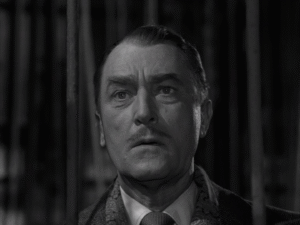
Booth Templeton is an experienced thespian with a rich history of successful plays and performances, but as of late, his best performances seem to be acting like he cares about the state of his life. He feels weary and past the point where the future can offer him anything other than mere existence. All he has is the memory of his lost love, Laura, and all of the good times they had together. And yet, he marches on, preparing himself for the opening rehearsal of a new play. But, when he arrives late to the theater, he is greeted by a young director who does not care about the name Booth Templeton, nor does he care about his past success as the lead in multiple plays. Templeton has gone from dressing up to being dressed down, and what’s worse is that this is happening in front of everyone. Overwhelmed, Booth heads straight for the exit, where he opens up the door to find a clamoring audience, waiting to congratulate Mr. Booth Templeton for his wonderful talent. But, something is off about this. It isn’t long before he realizes that by some magical feat he has exited not just the theater but the year 1960, and has somehow wound up back into 1927. When he is told that his wife Laura is waiting for him at their old speakeasy spot, he can’t believe it. And yet, there she is, along with his good friend Barney. Templeton desperately tries to get Laura to stop partying and listen to what he has to say, but she is having none of it. A smack to the face sends the final message: “we don’t want you here, Templeton.” He can only stumble his way out of the building. Lost for words, he removes some papers from his pocket that he snatched from Laura as he was trying to get her attention, a script, each line and action written as it was performed in the speakeasy. Laura and his friends were acting; they were forcing Templeton to get out of the past. Booth returns to the theater in 1960 and sets the young director straight about professionalism in the workplace, but he is excited to work with the young man and get started with rehearsal. With a new appreciation for the present and future, Templeton takes his seat at the table; he will now reserve his acting for the stage.
Episode Details
“The Trouble with Templeton” is directed by Buzz Kulik, and he did a wonderful job staging this. The teleplay is written by E. Jack Neuman. As for our cast we have Brian Aherne as our main protagonist Booth Templeton, Charles Carleson plays friend Barney Flueger, Sydney Pollack is director Arthur Willis, King Calder is our play financial backer Sid Sperry, and I want to give a special nod to Pippa Scott who plays Laura. She actually just recently passed away this past May, 2025. I will talk a bit more about her and one of my favorite scenes in the entire Twilight Zone series in my rating section. The episode first aired on December 9th, 1960.
Episode Tidbits
As for our tidbits, there are some interesting items in Martin Grams Jr’s Unlocking the Door. I don’t normally point out faux pas, mostly because I make plenty of my own, but I do think this one is silly enough that it’s fine. When Templeton interrupts Laura’s dancing the first time, you can clearly see that he breaks the set of pearls that she is wearing; however, when she starts to dance again on her own, you can see that the pearls are magically together again. When I read this in the book, I immediately went to the video tape, as we used to say, and sure enough this is the case. No criticism from me; I just think it’s a funny little human moment.
Question 1: What is the real trouble with Templeton?
I’m going to make what I hope is a rather thoughtful argument here for this term “the real problem” with Templeton. That being said, it would be foolish of me not to admit that there are myriad problems at play here, and so when I say the “real” problem, I’m really trying to organize a complex issue into something fairly manageable. In this case, I want to highlight two particular problems that seem paramount to discuss in relation to “The Trouble with Templeton.”
One of the first concrete issues that we see is the…troubling…relationship that he has with his current wife. She is openly flirting with a guest of the house–right out in clear sight. This is not only disrespectful in the sense that she is clearly having an affair, but the way that she is doing it…so openly defiant, indicates that she has very little respect for Templeton’s feelings or his sense of pride. She knows that he isn’t going to do anything about it so why hide it. And…Templeton somewhat proves this to be true. He tells his assistant, “Mrs. Templeton is not very discreet these days.” But, to be fair to her, in this same scene, Booth gives us a bit of a revelation. He says, “when a man my age marries a woman her age, he gets exactly what he deserves.” To me, the big takeaway from that revelation is that he married her to be in close proximity to youthfulness, but there doesn’t seem to be much more than that to connect him to her. In other words, love does not seem to have been his primary motivator, although it might have been there at one point.
Now, it’s obvious that Mrs. Templeton’s actions bother Booth, but he doesn’t seem to want to do anything about it. He simply allows it to happen. What this indicates to us is a complete loss of self-worth. I read a fascinating peer-reviewed article by Patrick W. Corrigan et al that breaks down a psychological concept known as the “why-try” phenomenon. It’s important to note that the authors are looking at individuals with diagnosed mental health concerns; however, I do think that the results can help many people deal with what can be quite a debilitating feeling. Here is what they found: “Results of path analyses showed people who
agree with and apply stigmatizing beliefs to themselves are likely to suffer self-disrespect. Decrease in self-respect leads to behavioral futility: Why try to pursue my goals? I am not
worthy of them or not able to achieve them” (13). In some sense, this sounds a bit like positive self talk leads to positive self worth, but it’s also a bit more complicated than that. The authors are looking at how we define ourselves with stigmas and how that stigmatization quite literally changes the ways in which we perceive our worthiness of things like success, happiness, and even love. If you happen to be experiencing such a voice in your head, you have to push back–even if you don’t mean it at first. Open up a new document on the computer, write it in a book, shout it in your car–tell it to shut the hell up. Because, it’s wrong. We all make mistakes; we all have points in our lives that we could have been better versions of ourselves. That doesn’t make us unworthy of what is our birthright as human beings: integrity, joy, and self worth. Keep repeating it until it finally becomes the dominant voice.
Okay, loss of self-respect/worth is one part of the problem. But, there is also another one that is even more potentially dangerous. We mentioned the scene early on when he notices his wife flirting with their house guest, and Templeton makes the kind of joke that you have to be very mindful of in the people you care about. He takes his medicine and then says to his assistant, “Perhaps she [his wife] is waiting for the day when these won’t do what they’re designed to do,” meaning the pills that are helping him stay healthy and alive. He then adds, “Perhaps I’m waiting for that day, too.” Now, some people have a dark sense of humor, in which case a comment like that might simply roll off into the air like nothing. But, these are the kinds of comments that we need to at the very least log in our minds in order to see if a pattern is forming in our loved ones. Listen, if you believe that someone is in a dark place like this, you do not have the luxury of being kind. You never apologize for loving someone when it comes to matters like this. Say something; do something; make things uncomfortable–and don’t you dare apologize for doing so. In the case of Templeton, he certainly at the very minimum half means it, which is why his assistant reprimands him on the spot.
I bring this up because even if we want to grant Templeton that it is a half-hearted dark joke, deeply embedded within it is this sense that the future is no longer something to be desired, no longer something from which the present can help to build. We have to always keep in mind that there is a relationship between past, present, and future when it comes to mindfulness. The past was once a future and a present; the future is a yet-to-be experienced present and past. It might sound silly to say that, but it’s vital because the loss of connectivity with any of these three can have really dire results on our overall mental health. In the particular case of Templeton, he only values the past that was–he doesn’t quite see the potential for the future or present to add meaningfully to his past.
An interesting little tidbit to highlight: when Templeton first walks into the speakeasy, Freddie Iochino’s, he runs over to a spot and says, “she isn’t at our usual table.” Freddie then points out Laura sitting with Barney at another table. Now, one of my favorite questions to ask with moments like this is “why include this?” If you took it out, the episode still functions without a hitch, so why is this moment in the episode? On the surface, it is a way to signal to Templeton that this is NOT a dream. A dream would have had Laura at that table because Templeteon would have written it that way himself. But, there is something more profound going on here. He wants Laura to be at the table because then his memory of the past can be preserved. In sitting somewhere else she challenges his memory and creates what narrative scholar Jerome Bruner calls a narrative breach, a break from the linear expectations of a narrative. Everything that now happens in this scene dynamically is a narrative breach, a chipping away a bit at his past. Now, a fair question is: Joe are you saying we shouldn’t preserve great memories? You unsentimental monster, you!” No, that’s not what I’m saying. What I’m trying to say is that a healthy relationship with the past includes a dynamic engagement with it. Why are you accessing that memory? How is it helping you in the present? Memories and nostalgia can be fantastic at boosting our feeling of connectivity with humanity and with our loved ones. But, we don’t want to build shrines to our memories, temples from which we worship only that one static moment in time that can never happen again.
And isn’t that the ultimate point here? Templeton’s loss of self-worth or respect; his complete collapse of a healthy view of time, all of these create the real problem with Templeton–You can’t live in a static dream, a vision of the past. But, and I hope this provides some hope for people who are struggling with their past right now. Every time you wake up, get out of bed, interact with the world around you, you are creating a past. When that past gets added to the one you have, it makes whatever you are currently struggling with a percentage point smaller of your overall past. To drive the point home, if you have only one terrible moment in the past, that’s 100% of your past. If you add a new moment, now that terrible one is only 50% of your past, then 25%, 10%, and then it gets even smaller from there the more you experience the present. Now, it will never be 0, but if we value the present and the future, we can make that terrible past moment, statistically insignificant. So, keep going; keep building a meaningful past through a meaningful present, and a hope in the future.
Question 2: Can we experience a kind of “Trouble with Templeton” moment outside of
the Twilight Zone?
Confession time: when I sat down and stared at this question, my first reaction was. Crap–I think I wrote myself into a corner on this one. But, as is the magic of writing, the more I wrote, erased, edited, rewrote, the more I actually made my way to what I think is something special. In fact, I actually experienced a kind of Trouble with Templeton moment in this process of writing. But, the way that I got there was by answering this question from a different perspective.
First, let’s define what we mean here. When I say a “Trouble with Templeton” moment, what I mean is an experience that readjusts the ways in which we look at time: past, present, and future. When Templeton is interacting with his wife Laura and his friend Barney, there is this desperate urge to not simply enjoy the experience but to own it, to capture it like a lightning bug in a jar. And, if you’ve ever captured a lightning bug when you were a child, you quickly learned that maybe this wasn’t such a good idea for the health of the lightning bugs. But, it also has the added benefit of teaching children that magic cannot be captured; it can only be experienced, which is why it’s so important for us to be present in the moment. And so, I suppose a Trouble with Templeton moment is actually a kind of moment of awe for me, one that creates an actual physical response within us that alters how we view our relationship with the present.
Okay, gather round children. It’s time for a story from Uncle Joey. When I was 21 or 22, I saved up and bought what was, at the time, a nice camera. It was a Canon Rebel XT, and it was cool. [Insert picture of dog’s eyes if you find it.] I took all of these fantastic pictures, and I even remembered to keep the rule of threes when it came to saving my pictures. I had them on the memory card, on an online platform, and even on a thumbdrive–and you know what? I still lost them all. It was a wonderful mixture of stupidity on my part and sheer bad luck, but virtually all of them got lost. I remember being really upset for a bit, and then just really calm. At some point, you have to accept what has happened. Since then, I’ve actually never been that big on taking photos for the sake of preserving memories as static images. Yes, I’m harkening back a bit to what we just discussed in question 1. And then, it happened.
As I was looking for any possible example of an image I took with that camera that I could share with all of you, Images from my time in college, my time dating my wonderful wife, birth of my niece and nephew, my wedding, holidays, family…people I’ve lost, friends…and I had this moment where I realized, that time is really weird. It’s somehow both the past and present. I say that because seeing these images actually did impact me with that true feeling of nostalgia, which in my opinion is actually a combination of joy and sadness in one, the experiencing of something wonderful and the loss of it at the same time. And yet, I thought about the things that I have in the present: thank God, my wonderful wife, my colleagues and students, all of you out there and this show that I enjoy doing, and I realized that we can have a kind of Trouble with Templeton moment. We can think about memories, or experience moments of the past, and they can be wonderful. But, we can’t stay there; and we can’t worship them.
As I looked at this one particular picture of me and my wife on one of our first dates, I felt that mixture of nostalgia. And then I realized: stupid, she’s right upstairs. This is the Trouble with Templeton moment. I was staring at my computer for a couple of hours pouring over these images and memories, and yes, it was incredibly moving, but it did almost trap me for a brief time in this overwhelming feeling of loss, that these moments, these feelings, these people are not going to be experienced again. But…and here is the crucial part. I was able to snap out of it when I thought about this Twilight Zone episode.
At the end of the “Trouble with Templeton,” Booth tells the young director the following, “I’ve just had a most remarkable experience, young man. I couldn’t possibly expect you to comprehend it. But, I’m going to tell you about it anyway…some day.” There’s one more part to this Trouble with Templeton moment. I think when we experience this kind of phenomenon, we desperately want to tell someone; we want to reach out to another human being. I reached out first to my wife and told her about it, and now I’m telling all of you. Let your memories, even the ones that might be a bit sad, help to shape a better present and future. Let it renew your spirit and trust in humanity, just like it did for Booth Templeton–and yes, even me.
Question 3: What are your moments of awe?
There is another theme in this episode that is, in my opinion, incredibly important, and I actually just touched upon it a few moments ago. Templeton is not simply longing for the past; he has disconnected from the present, from the communities in which he belongs. Toward the beginning of the episode, he is hesitant about joining the table of actors. Yes, one major part of that is because the director is throwing his weight around a bit, but there is a hesitancy there as well to engage with his colleagues. However, if you watch the ending of the episode, as Serling is giving his closing monologue, Templeton is actively walking over to the other actors and people involved to shake their hands and say, hello. He even gives a friendly hug and kiss on the cheek to a friend. Now, for a few years now, I have been genuinely thinking about the word “meaning,” as in what does it mean to have a meaningful existence? And I think engagement is actually a big part of the puzzle. Like we see in the example of Templeton, there is a call sometimes for withdrawal from the world in times when we feel weary or a bit overwhelmed by too much interaction. But, and here is the awe part. there is something magical about being with a group of people who have a similar interest or experience, sharing laughs, and talking about the past, present, and future. Just like our bodies have immune systems that try and build resistances to diseases, our psychology needs to build resistance and resiliency as well. The next time you have an opportunity to engage with a group of people of similar interests–say, a particular sci-fi/fantasy show from the late 1950s and 60s–suppress the voice inside you that says, “that’s too much work; and you’re too tired.” Instead, go, engage with humanity. We need communities now more than ever, and those communities likely need you as well. And in keeping with our theme of time, you will be creating a new past memory that you can draw upon for strength and connectivity with humanity in the future.
My Rating
As for my rating, I’m giving this one a Top Middle-tier. This is one of my favorite episodes. I wish we had just a smidge more of the post-speakeasy Templeton, but that’s maybe a bit of me nitpicking. This has possibly my second favorite scene in terms of acting–I really do love the way that the speakeasy just goes dark when Booth leaves; and the expression on actor Pippa Scott’s face as she steps into the spotlight is the stuff of dreams for an actor. We should all be so fortunate to create something so wonderful in our professional fields.
Next Episode
Next time, we’ll be taking a look at “A Most Unusual Camera” and here are your questions to consider when watching the episode:
Question 1: What role does the perception of humanity play in this episode?
Question 2: Why is the writing on the camera French?
Question 3: What are your moments of awe?
Announcements and Shout-outs
I’ve got some comments to highlight from the Youtube Channel as usual.
On my “And When the Sky was Opened” episode, @LWolf12 offers the following:
“Thought this was a good episode, the acting was good and set design was nice. Modern science hasn't damped the episode for me, I view it as science fiction, and while we have made advances in science & quantum theory. I think the mystery of what happen is part of the fun.”
Appreciate the comment. I agree. I don’t think modern science takes away from the effectiveness of these episodes. Sometimes, I’ll read criticism on Serling and they’ll say something like, “well, he wasn’t a real Sci-Fi writer like Matheson was.” Okay, fine, I don’t really see it that way, but I get the point. However, what Serling, perhaps, misses from the Sci-Fi part, he makes up in spades in the human psychology part. In this example, the psychological horror of disappearing.
On my “A Stop at Willoughby” episode, @21stCenturySpaceOdyssey offers the following:
“Great analysis man! I subscribed, good sir. BTW the plot of "A Stop At Willoughby" takes [place] in New York City and Westport Connecticut (a real bedroom community town in CT) and I'm not sure if you are aware of this: Serling lived in Westport just before he relocated to California.”
Thanks 21stCenturySpaceOdyssey, I was NOT aware that Serling lived in Westport CT for a few years. I visited his house in Binghamton last year at SerlingFest, but I’m going to have to make a pilgrimage to the Westport one. I love when people offer these insights.
@pinecone6 commented on my “Nick of Time” episode:
“i think the older couple could be them in the future. Its a warning of what can happen if you get involved with the mystic and letting it take over your thoughts and choices.”
Thanks, PIncone6. From some of the comments, I gather that I was NOT the only one who got this feeling that the older couple at the end of the episode was actually Pat and Don. Again, I don’t think it is supposed to be them, but their names are conveniently left out and they kinda’ do look like older versions of Pat and Don, so maybe there was something there that we were supposed to feel that way. Either way, I think you’re right about the lesson is still there for us to take away.
How to Support the Show
If you enjoyed the show and want to support our journey through the Twilight Zone, consider subscribing, liking, and sharing the show with a friend. And if you would like to share your thoughts on the Twilight Zone or the KOI episode, leave a comment. I just might highlight it and give you a shoutout in a future episode. If you don’t want me to use your comment, make sure you indicate that. You can also head over to thekeyofimagination.com to learn more about me, my work, and various academic projects that I might be working on in relation to the Twilight Zone and Rod Serling. That being said, even if you hated every minute of this, I’m still going to thank you for spending some time with me. Until next time, remember, all doors are open to those who possess the key of imagination.
Works Cited
Corrigan, Patrick W et al. “What Is the Impact of Self-Stigma? Loss of Self-Respect and the
‘Why Try’ Effect.” Journal of mental health (Abingdon, England) 25.1 (2016): 10–15. Web.