
The Twilight Zone Season 1: Episode 1
"Where is Everybody?"
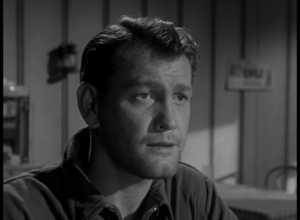
Do you remember how your day started? If you said, I woke up, you’re probably right. But, what if your first memory wasn’t actually waking up? What if your first real moment of consciousness was when you were standing in front of the sink in the bathroom, with a toothbrush in your hand and your mouth covered in minty fresh paste? Would you react at all? Would you have a moment where you thought, “how did I get here?” You might think, “well, before I’ve had my coffee, I’m not sure I’m even alive.” Fair enough. I’m in that group who needs a bit of a caffeine jolt to get going in the morning. But, that’s not really what I’m talking about here. I mean, what if your first moment of conscious existence could not be traced back to your having woken up? For Mike Ferris, our leading man in this inaugural episode, this is the case. His first memory is simply walking down a road; he doesn’t know where he is; and he doesn’t even know who he is. He has been thrown into existence. We’ll talk more about that in a little bit. Ferris finds himself in a town in anywhere USA. All he wants is a little food and a little company. It isn’t long before Mr. Ferris realizes that something is terribly wrong. There are signs of people everywhere, but no one to be found–and he can’t throw off this nagging feeling like someone is watching him. When you put all of this in a pan and add some heat, you don’t get stir fry; you get stir crazy. And by the end of the episode, we are reminded of the importance of human companionship.
“Where is Everybody?” is Directed by Robert Stevens, teleplay by Rod Serling, original music score by Bernard Hermann, starring Earl Holliman as Mike Ferris. First telecast: October 2nd, 1959.
According to Martin Grams Jr’s The Twilight Zone: Unlocking the Door to a Television Classic, Serling got the idea for the episode when he was “ walking through an empty village set at the back lot of a movie studio” (165). When I read that quotation it immediately reminded me that, the people who are most creative, are the ones who are the most open to the potentials of any given situation. According to Marc Scott Zicree’s The Twilight Zone Companion, Serling originally opened The Twilight Zone with, “there is a sixth dimension.” But, this was one too many dimensions for CBS Program Executive Bill Self, who challenged Serling, asking, “Rod, what is the fifth one?” When neither man could materialize a fifth dimension on the spot, it was decided to rewrite the opening as “there is a fifth dimension.”
My initial thoughts on this episode are positive, but I also think it’s the kind of episode that I’ll simply call a grower–I intend this to be a family-friendly show, so keep your giggles to a minimum. What I mean by that is, there are certain episodes that if you see them prior to, let’s say 30ish, they don’t quite hit home. But the more we grow and mature, the more they gain a kind of impact. When you’re young, you might see this episode and think it’s boring–after all, nothing really happens, per se. But, it is in that nothingness, that those of us who are a bit older, can find a kind of human horror.
I particularly enjoy the ending of the episode, when Ferris asks the doctor what happened to him, and the doctor tells him basically that we can supply all kinds of reading materials, oxygen, food, but we can’t simulate the basic need for human companionship. Today, it seems like we are moving ever more closer to a time when robots will provide us with push-of-a-button companionship. I won’t spoil it for those of you who have not seen it yet, but there is a fantastic episode of the Twilight Zone that really explores this theme, along with how we weigh crimes and punishments. I suppose I’m a bit of a romantic, and I’m sure I’ll say it a few times over the course of this show, so why not start now with the first real episode: I’m very much worried about a future where humans look to robots for companionship. I know it might seem like a panacea or a way to push back against loneliness–something we’re going to speak about in just a moment. But, I’m not 100% sure that our mushy brains can actually handle such a relationship–or at least not on a mass level. But, that’s all I’ll say about that for now.
Dive into question 1: If Mike Ferris had another human being with him, would it make his situation any better? Ferris is battling a lot of forces in this episode, but at the forefront is this growing sense of isolation. Throughout the episode, he desperately wants another human being with him to share in the ridiculousness of the situation. This is something that comes rather naturally to us as humans. Have you ever seen a disgruntled patron at a store who isn’t getting their way? What do they eventually start to do? Look around for anyone who will agree with them, for anyone who will recognize their plight and share in their moment of public suffering. Whether we like to admit it or not, we draw great strength from each other, which is what makes our current situation in the world all the more frightening.
In 2023, the US Surgeon General, Dr. Vivek H. Murthy, issued an advisory, which is an official public statement, discussing an epidemic of loneliness across the United States–to be fair, I think this loneliness extends beyond the United States, so for my international listeners, you’re not alone–or, wait, I mean you are. I’m not sure what the polite, uplifting thing is to say there. This epidemic of loneliness seems to even transcend our ideas of eastern and western hemispheres–I’m told my international students that it is all over the place. The advisory has some stark statistics and concerning observations. Quote: “ The lack of social connection poses a significant risk for individual health and Longevity. Loneliness and social isolation increase the risk for premature death by 26% and 29% respectively. More broadly, lacking social connection can increase the risk for premature death as much as smoking up to 15 cigarettes a day. In addition, poor or insufficient social connection is associated with increased risk of disease, including a 29% increased risk of heart disease and a 32% increased risk of stroke. Furthermore, it is associated with increased risk for anxiety, depression, and dementia.” (8).
I’m going to speak to the anxiety and depression part here a bit. There are different types of loneliness in the world. If we lose a spouse, we can feel lonely. But, that’s not the same thing as being with a spouse and feeling lonely. I think both of those scenarios can produce varying levels of depression, but death is something that we have dealt with since the beginning of life–and as horrible as it can be, we have ways that we can deal with it that have been past down to us through generations: grieving, relying on friends and loved ones, and even reading and writing. But, the kind of loneliness that comes from being WITH someone, seems to me to be a much more nuanced phenomenon, and, in some ways, even more difficult than losing someone. What makes “Where is Everybody” such an interesting episode is the fact that there are signs of life all around him, food, sounds, things that showcase all of the ways we live as a community. If he were left on a planet where there were no other human beings, one could potentially train for such a situation and practice long periods of isolation. But, if you are getting teased by the prospects of social interaction, I can understand how a man might lose his mind eventually. Therefore, there’s a part of me that always wonders, what exactly are you testing here with this simulation? Mike Ferris’ eventual breakdown is completely understandable, and I could see a fair share of people falling into the same patterns of depression and hopelessness, perhaps even myself–given enough time.
Ferris reaction in this situation to me reads as normal. I would be far more worried about someone who embraces the solitude and cares nothing for the signs of humanity. Although, that would be the ideal individual for this particular task.
Dive into theme 2: How does consciousness, his awareness of himself, add to Ferris’ terror? When Ferris is talking to the female mannequin, he tells her, “When I woke up this morning, well…I didn’t exactly wake up. I just found myself out on that road, walking.” In that moment he experiences a kind of Heideggerian horror, a clarity of his thrownness into existence. But, it’s worse because he can’t sufficiently match the context with his existence, so he is trapped in a state of angst. It makes me wonder how much easier this whole experiment would be if they had simply made Mike wake up first in this simulated world. It might have led to a different outcome.
You’ve heard the phrase, “existential horror” or “existential angst.” This episode is probably the best example of this concept that you might ever come across in your life. The philosopher Heidegger was interested in the state of being and how we understand being. What he famously uncovered is that we are, for all intents and purposes, thrown into the state of being. As in, we have no say in where we are born, or in the circumstances in which we exist. We are merely thrown into life. And we can’t simply transcend the context of our being. It is something that will always be a part of us; therefore, according to Heidegger, it is important for us to understand the relationship between our existence, the context of our existence, and, if that’s not enough, the fact that we will eventually die and our existence will end. Whenever I talk philosophy with my students, I always try to remind them to think about what is useful in it. What parts of it make you a better version of yourself–don’t be afraid to throw away the rest. I want to be clear; it’s not that I’m telling them to not value the other information; however, when you’re young, it can be difficult to compartmentalize information. The important thing is for young adults to try and figure out who they want to be? What kind of individual do they want to bring out into the world? I’ve had young college students come into my office and claim that they are Nihilists, and after we lay out what nihilism actually is, the majority of those students just smile and say, “okay, maybe I’m not a nihilist.” That’s all that I mean by don’t be afraid to throw aside the information that leads you away from being the person that you want to be. There will be plenty of time to grapple with truly deep concepts later on in life.
I don’t necessarily grapple with Heidegger on a routine basis, but I would like to amplify and extend his idea of thrownness a bit and connect it to a problem that I see in today’s society all over the place. I think we tend to suffer today from a hyperconscious awareness of being. What does that mean? Well, we are too much aware of our existence, too much aware of time moving, of cells dying, of days diminishing. This can create a kind of existential horror for people. Now, I do think that we have some ways that we can push back against this horror–although there is no 100% cure, the answer to me is always mindfulness. Time is not wasting away; you have it, and you choose what you want to do with it while it’s available to you. And when you have a moment of pure clarity to realize how special it truly is for you to be both alive and aware that you’re alive, THAT is when you need to capitalize on it by doing something beautifully human. Seek out something that moves you, or seek out something that moves someone you love. I often tell my students, I have no idea how to make myself happy. When I’m feeling my worst, I usually try to make someone else feel better. My wife knows this. I’ll buy her flowers sometimes and she’ll say, “thanks.” She’s always grateful for the thought. But, she also knows me well enough to sometimes ask, “Are you feeling all right?” That, ladies and gentlemen, is the beauty of intimacy. So, be mindful, and be connected. Recognize the importance of maintaining contact with those you love and those who love you.
Just to tie this all back to our episode. As Ferris’ feeling of being watched continues to grow, so does his conscious awareness of his being. When he can’t find anyone else to share in his experience, he realizes that he is it–he is the only animated object of flesh that can pull a subjective glare from outside eyes. And so, although the feeling of being watched connects with all of the doctors and servicemen who are watching him in the simulation, there is also this sense that there is nowhere to hide, no other entities in the simulation to pull focus away from him. And that adds to the horror of the situation.
What were your moments of awe? The moments that moved you or prompted you to think more deeply about life? Right off the bat, I’m going to just mention that conversation with the female mannequin. It made me think about various scenes from other movies and tv shows where people start to talk to inanimate objects. The two that always come to my mind are Will Smith in I am Legend, and of course, can you guess? A certain character named Wilson, from a movie about a man who is literally alone on an island: Castaway, with Tom Hanks. I can openly say, if I thought that i was stranded somewhere with little hope of being rescued, I would probably start talking to objects right away as a method of maintaining my sanity. Maybe that’s the wrong way to go, but it makes sense to me. What do you think, IBM?
There’s a wonderfully eerie moment at the 6:44 mark, where it’s so quiet, and Ferris is just looking around the town. And he finally realizes I'm in trouble. I was fortunate enough to go to the Massachusetts museum of modern art where they had an exhibit that was a completely dead sound stage, and it was eerie. If you just sit still for a moment, you might think that this is silence. But, there is silence, and there is the complete absence of sound. If you ever get the chance to experience that, I highly recommend it.
When he gets trapped momentarily in the phone booth and then again later when he goes into the police station and the jailcell door almost closes on him. Oh, could you imagine getting trapped within a trap? At least you had the freedom to explore the nothingness to utilize the space, but to further constrict your ability to feed your mind with new information, that’s just an absolute death sentence.
Finally, that evolutionary feeling that something is watching us. It’s like a remnant of the days when we were very much aware that we are prey as much as predators. At the end when he just keeps screaming that someone is watching me. You can’t help but feel a bit startled because I think most of us have felt that at least once in our lives, and it can be quite unnerving.
I’ll leave it to just those moments for now. Make sure to tell me yours, and I’ll share them on the show.
Rank the episode as either lower tier, middle tier, or upper tier. Okay, I thought long and hard about what kind of ranking system I would like to use, and honestly, I like the way that Tom Elliot of The Twilight Zone Podcast does it, with a slight expansion. Shout out to Mr. Elliot by the way. That podcast deserves every bit of accolades it gets. I know he’s also working on or starting to work on a book, which I’ll be purchasing when it comes out. All that to say, I like the idea of lower tier, middle tier, an upper tier, but I’m going to make things a bit more precise by adding gradations within the tiers. So, something can be upper-upper-tier, upper-middle-tier, and upper-lower-tier, and so on all the way down the line.
I would place this episode in the middle-upper-tier. I want to be really choosy about anything that I place in the upper-tier, so that’s where I’m standing on this one. It’s a great episode, and a wonderful pilot episode for the show. Our next episode is “One for the Angels”, and here are your two themes and/or questions to think about: Remember, sometimes there are spoilers in my questions, so if you don’t want to hear them go ahead and stop here and watch the Twilight Zone episode, and then come back here for the questions.
Question 1: Do you think the angel of death always knows what is going to happen in the end? In other words, is he simply pantomiming for the benefit of Bookman?
Question 2: Does Bookman’s reaction to death represent how most people think about it, or does he have a unique view?
Question 3: What are your moments of awe for the episode? What moves you emotionally or prompts you to think more deeply?
I’ve got the skeletal structure for the website up and running. It’s not completely finished. That might take some time to tweak it based upon the needs of the show. However, you can head over to thekeyofimagination.com and continue our conversation. You can navigate to the “Where is Everybody?” episode and give your ranking, which I’m quite curious about whether or not people placed this in one of the upper tiers. You’ll also find contact information for getting in touch with me. Feel free to email me your thoughts, or send an audio or video clip of roughly no more than 5 minutes to keyofimaginationshow@gmail.com.
If you enjoyed the show, I ask that you please take a moment and do one of the following to help build our community. Rate the show, review the podcast, leave comments, thumbs up, all of the usual algorithmic gymnastics. That will help get the show in front of more people and help us build our community of Twilight Zone fans. However, even if you do none of that and absolutely hated every minute of this, I would still like to thank you for spending some time with me. Until next time, remember, all doors are open to those who possess the key of imagination.